The wearables market has long been polarized between two extremes: feature-heavy smartwatches burdened by power-hungry operating systems, and rudimentary fitness trackers. Striking a balance is now critical for capturing the mass-market consumer—a demographic that increasingly prioritizes battery longevity over an excess of bells and whistles. According to recent leaks, Samsung aims to bridge this gap with a new device: the Galaxy Aero. This product could be the definitive answer to market demand for a comprehensive smartwatch that pairs extended endurance with an accessible price point.
Speculation surrounding Samsung's next generation of wearables is coalescing following the discovery of hidden references within the Galaxy Wearable app. A deep dive into the system code has revealed the name "Galaxy Aero," accompanied by the technical identifier galaxy_rtos_watch—a clue that provides a clear indication of the product's strategic direction. The defining characteristic of this upcoming release will be a pivot away from the full-fledged Google Wear OS in favor of an RTOS (Real-Time Operating System).
The transition to a real-time operating system is not merely a simplification, but rather a calculated architectural trade-off. While Wear OS offers users virtually unlimited third-party app integration and deep synergy with Google services, it demands significant hardware resources and aggressively drains battery life. In contrast, an RTOS operates on a fundamentally different principle: it is lean, deterministic, and optimized for a specific set of tasks. This allows for a substantial reduction in power consumption, effectively shifting the device's endurance from a few days to a full week of autonomy or more.
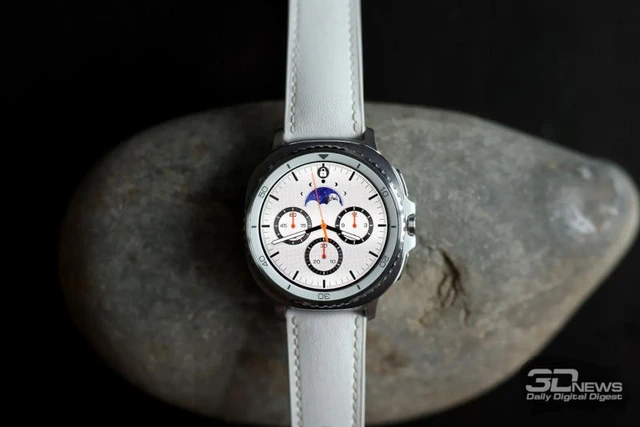
In terms of market positioning, the Galaxy Aero is not intended to replace the Galaxy Fit line. Instead, Samsung appears to be carving out a new segment: "affordable smartwatches." Visually and in terms of form factor, the device will likely mirror the Watch FE series—offering the aesthetic of a traditional timepiece but powered by more modest internals. Despite the streamlined OS, the functional baseline remains intact; the device will retain all essential health-monitoring sensors, including accelerometers and heart rate monitors.
For Samsung, this move represents a logical conclusion to its strategy of filling portfolio gaps. Following the release of the Galaxy Fit 3 in 2024, the company effectively left a void for devices that possess the premium look of a watch but operate with the efficiency of a fitness tracker. The introduction of the Galaxy Aero allows the brand to capture an audience that doesn't require a complex "smart assistant" on their wrist, but views aesthetics and extended battery cycles as critical priorities.
 Meta’s New Era of Visual Interaction