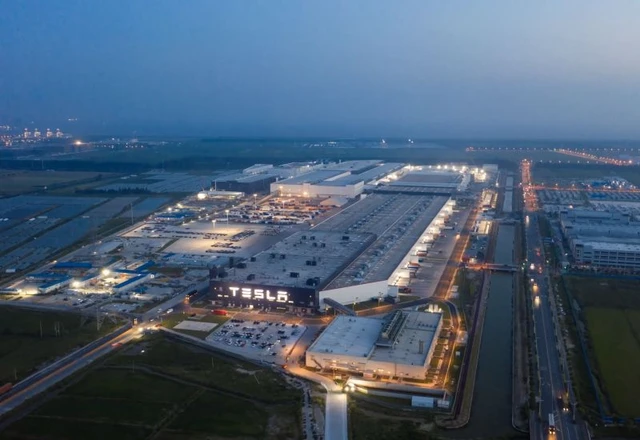
For years, Giga Shanghai was hailed as the benchmark of operational efficiency and the primary engine fueling Tesla's global expansion. However, recent data reveals a tectonic shift in the company's delivery architecture. For the first time in years, the share of Chinese production in Tesla's global output has fallen below the critical 30% threshold. This trend exposes a widening chasm between the brand's global momentum and stagnating demand in the world's most dynamic electric vehicle market.
Tesla's Shanghai Gigafactory has long defied industrial norms. Its uniqueness stemmed not only from an unprecedented pace of construction but also from a status rarely granted in China: the ability to deploy production without the mandatory requirement of a local joint venture. For years, this facility served as the beating heart of the brand's global logistics, accounting for the assembly of nearly half of all vehicles delivered worldwide.
However, current statistics signal the sunset of the Shanghai hub's absolute hegemony. In the second quarter of this year, the share of China-produced electric vehicles in total global deliveries dipped to 26.28%—the first time this figure has fallen below the 30% threshold since 2020. For context, the plant reached a historic peak in the fourth quarter of last year, providing 46.15% of all global shipments.
Even more telling is the shift in the facility's operational paradigm. For the first time in its history, the Shanghai plant exported more vehicles (128,394 units) than it sold within the Chinese domestic market (126,157 units). In essence, the factory has evolved from an instrument for domestic market penetration into a global export hub.
This pivot is the direct result of a profound demand slump within China. Tesla's local deliveries contracted by 2.05% year-on-year, marking a downward trajectory that has persisted for five consecutive quarters. Conversely, on a global scale, the company continues to show robust growth: total deliveries for the second quarter surged by nearly a quarter, reaching 480,126 vehicles. This indicates that Tesla's expansion is now being propelled by markets outside the Middle Kingdom.
The situation in China illustrates the stark reality of the modern EV landscape. In a region where product lifecycles are measured in months and competition from local giants has reached a fever pitch, Tesla is struggling with technological inertia. A limited model lineup and infrequent product refreshes have rendered the brand less appealing to the Chinese consumer, who is accustomed to rapid shifts in trends and functional capabilities.
The company's attempts to stimulate sales through aggressive financing and credit incentives are proving to be mere stopgaps. Without a comprehensive overhaul of its product portfolio, Tesla risks permanently losing its status as the primary trendsetter in the region that once served as its most critical production stronghold.
 Driver Attention Monitoring in Tesla Electric Vehicles