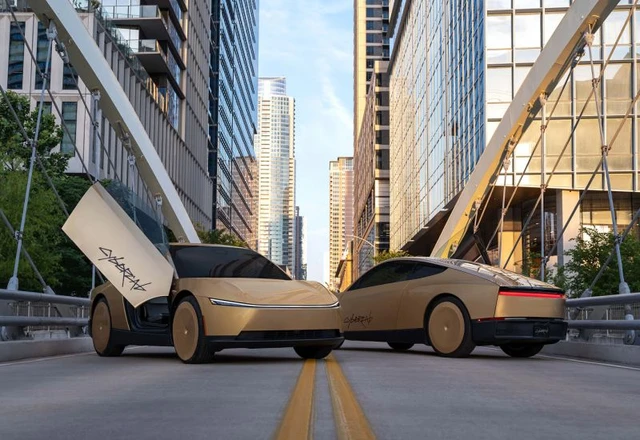
The paradigm of urban mobility is shifting rapidly, moving away from individual vehicle ownership toward "Transportation as a Service." The unveiling of the Tesla Cybercab marks a pivotal milestone in this transformation, introducing a vehicle entirely devoid of traditional controls. The transition toward the commercial deployment of fully driverless vehicles—operating without a human safety driver—represents a critical inflection point for the entire autonomous mobility sector. This is no longer a mere technological demonstration; it is the blueprint for a comprehensive urban mobility ecosystem.
The autonomous vehicle industry is transitioning from a phase of conceptual promises into the realm of tangible commercial operation. The latest pivotal step in this evolution is the launch of the Tesla Cybercab—a two-seater electric vehicle that decisively severs the link between driver and machine by completely eliminating the steering wheel and pedals from its design. Despite a relatively low-profile media rollout, the company has confirmed that these units have already begun transporting passengers on a commercial basis and are now available for acquisition by third-party fleet operators.
The Cybercab is engineered not merely as a means of transport, but as a purpose-built instrument for urban mobility. Beyond accommodating two passengers, the vehicle offers substantial cargo capacity, capable of housing bulky sports equipment or even two-wheeled transport. Mass production commenced in July, following a series of rigorous trials in Texas, where the company's primary manufacturing hubs and corporate headquarters are concentrated.
The shift toward fully autonomous models is occurring incrementally. Previously, robotaxis based on production Model Ys—which retained conventional driver controls for safety redundancies—were deployed in cities such as Austin, Dallas, Houston, and Miami. The Cybercab is designed to replace them, expanding Tesla's footprint across these regions. In Texas, the company has secured the right to expand its autonomous fleet to 314 units, 45 of which have already received official authorization to charge for fares in fully autonomous mode.
However, when viewed through the lens of the global autonomous transport market, Tesla currently finds itself playing catch-up. For comparison, Waymo operates a fleet of over 700 driverless vehicles in Texas alone, while the more understated Avride utilizes 344 Hyundai Ioniq 5 EVs in a similar capacity. Within this paradigm, the role of human personnel in the Tesla ecosystem is shifting toward pure operational oversight: remote route monitoring, technical maintenance, cleaning, and charging management.
Parallel to the development of its own service, Tesla is opening Cybercab access to enterprise clients seeking to automate their logistics and transport networks. This aligns with a broader trend in the US market, where regulators are becoming increasingly permissive. For instance, Zoox has already received authorization to operate up to 2,500 driverless shuttles devoid of manual controls. Nevertheless, the expansion of such systems across the US remains a patchwork, as legislative regulation varies significantly by state.
Particular emphasis is being placed on the infrastructure backbone, without which an autonomous fleet loses its viability. Tesla has evolved from the concept of complex robotic arms designed to plug cables into ports toward a vision of wireless inductive charging. An underbody induction coil allows the vehicle to replenish its energy without human intervention—a critical requirement for driverless fleets operating on a 24/7 cycle. This technology has already been integrated into the Cybertruck and will serve as the baseline standard for every Cybercab unit.
 Nvidia N1X and the New Era of Arm PCs