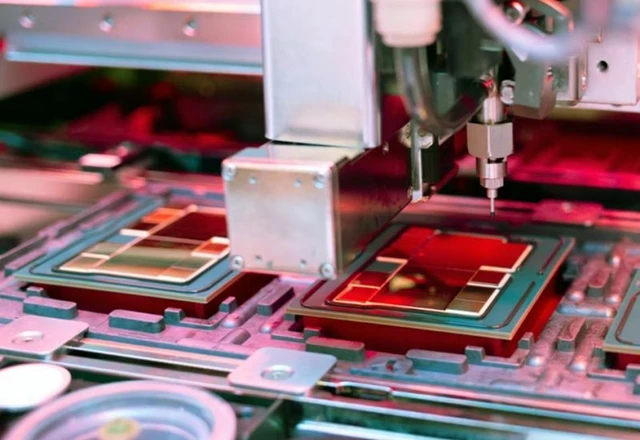
The tech industry is currently pivoting from centralized cloud computing toward the paradigm of Edge AI, shifting computational power directly onto the end-user's device. The primary obstacle in this transition is thermal management—the struggle to dissipate heat within an extremely constrained physical footprint. Sugon has introduced a solution that defies conventional expectations for mobile workstations; by integrating a 64-thread processor into an ultra-slim chassis, the company is establishing a new performance benchmark for local neural network deployment.
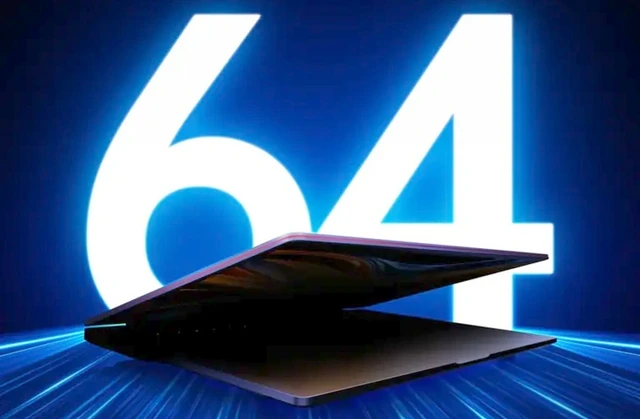
For years, the mobile computing industry has been trapped in a tug-of-war between portability and raw performance. However, the emerging demand for local Large Language Model (LLM) deployment is forcing manufacturers to fundamentally rethink hardware architecture. Sugon is entering this arena with an ambitious proposition: a mobile workstation that, despite a slim 16.9mm profile, delivers computational capabilities on par with full-scale desktop systems.
A critical benchmark for the device's efficiency is its ability to handle Mixture of Experts (MoE) models. Unlike dense neural networks, the MoE architecture activates only a subset of parameters for any given query, significantly optimizing inference speed. Sugon claims to achieve a throughput of 50 tokens per second when running a 35B parameter MoE model. According to the company, this performance several-fold exceeds that of mainstream consumer systems, positioning the device as a professional-grade tool for AI developers who prioritize data privacy and autonomy.
While the full technical specifications remain partially obscured, available data allows for educated assumptions regarding the device's silicon. It is highly probable that the system is powered by the Hygon C86 family, based on the x86-64 instruction set. Hygon's solutions have already demonstrated impressive scalability in the server segment, making their transition into a mobile form factor a logical evolution.
There are two likely scenarios for the 64-thread configuration. The first involves the use of Hygon 3 series chips, which can scale up to 32 physical cores. The second, more sophisticated approach, suggests the implementation of the C86-5G architecture with SMT4 (Simultaneous Multithreading) support. In this configuration, each physical core can process four threads simultaneously. Consequently, even with only 16 cores, the system would provide the targeted 64 threads, significantly mitigating thermal challenges within a chassis under 17mm thick.
The graphics subsystem warrants particular attention. The inclusion of 16 GB of dedicated VRAM clearly indicates the use of a discrete GPU. In the era of generative AI, VRAM capacity is the deciding factor; it determines the size of the model that can be loaded locally without suffering severe performance degradation. Opting for a dedicated GPU over an integrated solution underscores the workstation's professional orientation.
While specific component models and release dates remain undisclosed, the mere existence of such a device signals the start of a new arms race. The pursuit of compute density per square millimeter of PCB is becoming the dominant trend, and by merging server-grade power with mobile ergonomics, Sugon is setting a high benchmark for the entire industry.
 The Horizon of China's Technological Sovereignty in Lithography