Bridging the connectivity gap in remote regions and disaster-stricken areas has long been a tug-of-war between the prohibitive costs of satellite constellations and the inherent limitations of terrestrial infrastructure. The solution lies in the concept of HAPS—High Altitude Platform Stations—which occupy a strategic middle ground between Earth's surface and orbit. Recent trials conducted by Sceye and SoftBank demonstrate that these stratospheric platforms can function as fully operational telecommunications hubs. This paradigm shift promises to fundamentally redefine how connectivity infrastructure is deployed on a global scale.
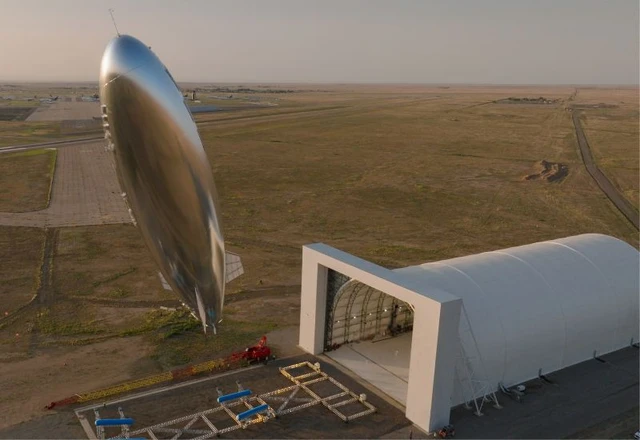
The concept of leveraging aerial platforms to bridge the "digital divide" is well-established, yet the transition from theoretical modeling to operational reality has long been hindered by formidable engineering hurdles. The recent transcontinental flight of Sceye’s stratospheric airship—journeying from New Mexico to Japan—marks a pivotal milestone. Covering over 15,000 km across the Pacific Ocean in 13 days, the craft demonstrated not only flight autonomy but its viability as a fully functional base station.
At its technical core, the project envisions an "aerial cell tower" operating at an altitude of approximately 16.5 km. At this height, the craft ascends above the majority of weather patterns and tropospheric turbulence, enabling extended endurance. The efficiency of this approach is striking: a single stratospheric module provides coverage equivalent to roughly 500 terrestrial base stations. Furthermore, it requires no specialized hardware; standard smartphones connect directly to the SoftBank network, supporting data transmission, voice calls, and high-definition streaming.
Of particular interest is the craft's performance within active operational airspace. Near Cape Muroto, the airship demonstrated impressive geostationary precision, maintaining its position over a designated point with a deviation of only 5 km, despite intense stratospheric winds. This level of stability is critical for ensuring signal consistency and minimizing radio interference with existing ground-based networks.
However, the primary technological breakthrough was the integration of edge computing directly on board. For the first time, a stratospheric platform assumed the roles of both a mobile network core and a web server. By shifting computational power from remote cloud data centers to the point of access, request processing time was slashed to 68 ms. This represents a 40% improvement over traditional cloud-based routing, unlocking new possibilities for applications requiring ultra-low latency.
From an infrastructural strategy perspective, these platforms are viewed not as a replacement, but as an agile augmentation of terrestrial and satellite systems. In disaster response scenarios—where physical towers may be destroyed—the deployment of a stratospheric module can restore regional connectivity within a matter of hours.
SoftBank, which has invested in Sceye and secured exclusive rights for the technology in Japan, plans to launch pre-commercial services by 2026. This achievement builds upon Sceye's previous successful trials, including flights in Brazil, and validates the viability of high-altitude platforms as a new standard for global connectivity.
 Seamless Phone Number Transfer Between iPhones