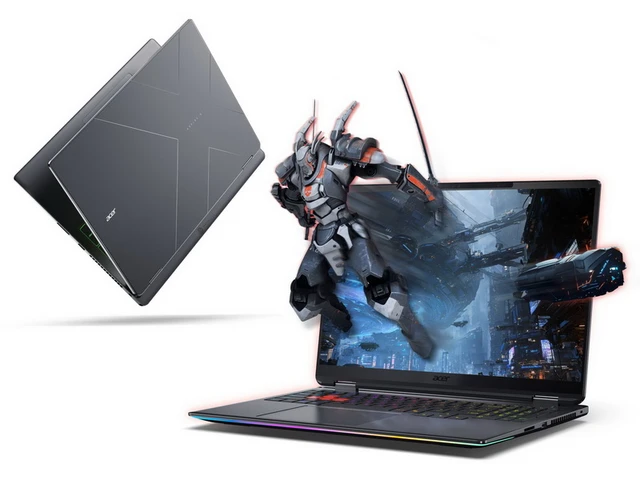
The contemporary computing landscape is increasingly focused on blurring the lines between digital content and physical reality. The shift toward local execution of resource-intensive neural networks and immersive visualization demands a fundamental reimagining of hardware architecture. Acer’s new Aspire G 3D 16 embodies this trajectory, consolidating professional 3D design tools and the raw computational power required for Large Language Models (LLMs) into a single chassis. This device evolves the laptop from a mere utility into a comprehensive, autonomous workstation for creative production and deep analysis.
The era of traditional flat-panel displays is steadily yielding to the rise of spatial computing. At the heart of the new Acer Aspire G 3D 16 is an ambitious objective: to provide users with a full-fledged stereoscopic experience without the need for cumbersome glasses or VR headsets. For gamers, 3D artists, and engineers, this translates to the ability to perceive depth and volume directly—a critical advantage when working with intricate models and complex visual content.
The technical execution of this effect relies on the SpatialLabs 3D Hub hardware-software ecosystem. When immersion mode is activated, the resolution of the IPS display—which typically delivers a crisp 3840 × 2400 pixels—pivots to 1920 × 2400. This allows the system to generate two distinct perspectives for the left and right eyes, creating a convincing illusion of depth. A high refresh rate of 120 Hz and DCI-P3 color gamut coverage ensure that the imagery remains fluid and vibrant, while a brightness of 450 nits ensures comfortable operation even under intense ambient lighting.
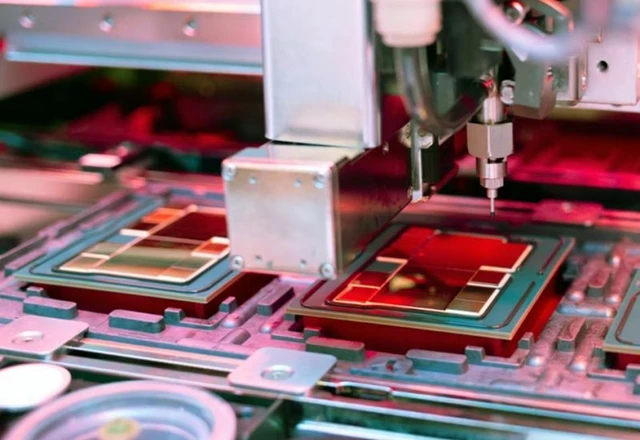
However, the visual experience is merely the tip of the iceberg. The device's true power resides within its "silicon core." The laptop is powered by the AMD Ryzen AI Max+ 395 from the Strix Halo series—a powerhouse featuring 16 cores and 32 threads that effectively blurs the boundary between a mobile processor and a full-scale desktop workstation. The graphical workload is handled by the integrated Radeon 8060S GPU, which operates in tight synchronization with the CPU.
The approach to memory architecture is particularly noteworthy. The integration of up to 128 GB of LPDDR5x unified memory clocked at 8000 MHz transforms the Aspire G 3D 16 into a unique instrument for artificial intelligence. It is well-established in the industry that the primary bottleneck for the local deployment of Large Language Models (LLMs) is VRAM capacity. Thanks to this massive pool of unified memory, the laptop can execute resource-intensive models, such as OpenAI's gpt-oss-120b or OpenClaw, locally—eliminating reliance on cloud services and ensuring total data privacy.
The system's AI throughput reaches an impressive 126 TOPS (trillions of operations per second). A significant portion of this performance is driven by a dedicated Neural Processing Unit (NPU) delivering 50 TOPS, freeing up the primary cores and GPU for other tasks. This creates a synergistic effect where the device can simultaneously render a 3D scene and process complex neural network queries in real time.
To ensure the precision of the 3D display, the laptop is equipped with a 5-megapixel webcam with IR illumination. Beyond standard video conferencing, it functions as a gaze-tracking system, allowing the software to dynamically adjust the image perspective based on the user's head position.
In terms of ergonomics and connectivity, Acer has successfully struck a balance between raw power and portability. Weighing 1.8 kg with a thickness of less than 20 mm, the device features a comprehensive array of ports: from modern USB4 Type-C and HDMI 2.1 to the classic RJ-45 and an SD 4.0 card reader. Endurance is provided by a 99.9 Wh battery, pushing the practical limit for devices permitted on aircraft. Support for Wi-Fi 7 and Bluetooth 5.4 completes the profile of a cutting-edge high-tech workstation, ready for the challenges of the next decade.
 The Horizon of China's Technological Sovereignty in Lithography