Valve has finally put an end to months of anticipation, unveiling the official pricing and launch date for the Steam Machine. This compact gaming powerhouse aims to redefine the home gaming experience, blending the versatility of an open-architecture system with the streamlined form factor of a traditional console. While the price point is steep, the device leverages the strength of the Steam ecosystem and the inherent openness of Linux. It represents a calculated strategic move by Valve to penetrate the living room—a territory long dominated by closed-garden platforms.
The highly anticipated launch of the Steam Machine is set for June 29. Valve has positioned the device's entry price at $1,049, offering a product designed to obliterate the boundary between the raw power of a full-fledged PC and the seamless convenience of a gaming console.
To mitigate launch-day chaos and ensure the equitable allocation of limited initial stock, Valve is implementing a randomized queuing system. Prospective buyers will be placed on a waiting list, with purchase invitations being dispatched starting on the official release date.
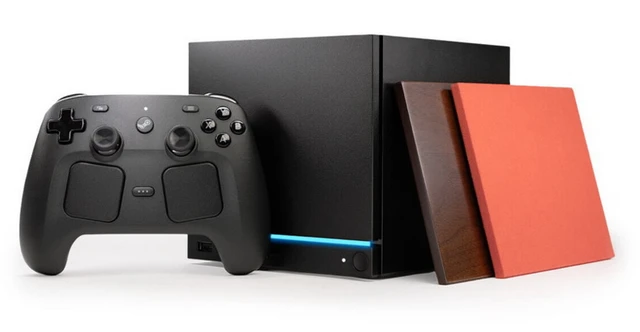
The Steam Machine lineup comprises four distinct configurations, allowing users to calibrate the balance between performance and budget. The base model, featuring a 512GB SSD, is priced at $1,049. For those seeking a comprehensive bundle, a version including the Steam Controller is available for $1,128. High-end modifications, equipped with a 2TB drive, are priced at $1,349, while the top-tier bundle with the controller reaches $1,428. Notably, owners of the premium configurations will gain more than just expanded storage; they will have the option to personalize the device's aesthetics with interchangeable faceplates in "red fabric" and "walnut" finishes to complement the standard black chassis.
A comparative analysis of its market positioning reveals that the Steam Machine carries a significantly higher price tag than traditional home consoles. While the PS5 Digital Edition, Xbox Series X, or PS5 Pro are available at much lower price points, Valve’s newcomer enters the market with a fundamentally different value proposition. Even with performance levels comparable to the PS5, the system's primary advantage lies in its unrestricted access to the Steam library and its native Linux-based architecture, effectively transforming the device into a fully functional personal computer that can be tailored to any requirement.
Valve's pricing strategy is particularly noteworthy. The company asserts that the Steam Machine is being sold at the cost of its components, completely foregoing profit margins or hardware subsidies. This underscores a strategic pivot toward expanding the user base of its ecosystem rather than generating immediate revenue from hardware sales.
The road to release has been fraught with challenges. Initially, the Steam Machine, the new controller, and the Steam Frame VR headset were slated for an early 2026 debut. However, a global semiconductor shortage affecting RAM and NAND flash memory forced Valve to recalibrate its delivery schedule and pricing strategy. Consequently, the company accelerated the rollout of the Steam Controller in May. Demand for the peripheral was so overwhelming that a portion of the orders has been pushed back to next year. Meanwhile, the fate of the Steam Frame VR headset remains ambiguous, with pricing and release windows still undisclosed.
The system's technical architecture represents a calculated compromise between energy efficiency and raw throughput. The Steam Machine is powered by a semi-custom six-core, 12-thread AMD processor based on the Zen 4 architecture. It reaches clock speeds of up to 4.8 GHz while maintaining a modest Thermal Design Power (TDP) of 30W. The graphics subsystem is built on RDNA 3 (GPU Navi 33 with 28 Compute Units), operating at frequencies up to 2.45 GHz with 8GB of GDDR6 memory.
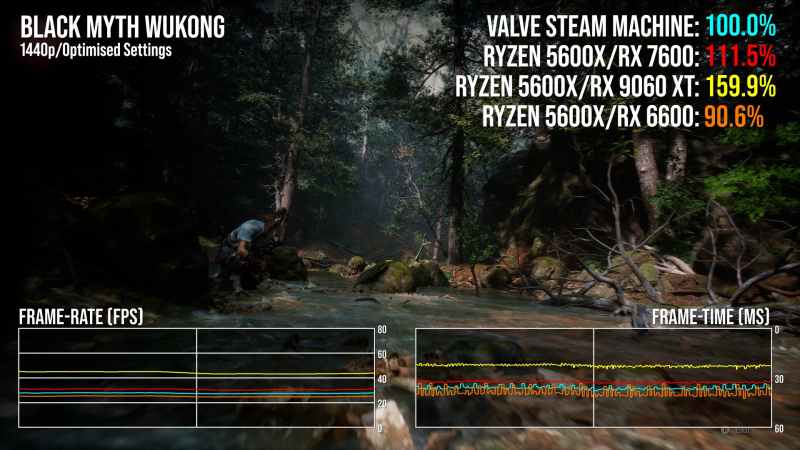
A granular look at the interfaces reveals that the GPU is connected via eight PCIe 4.0 lanes. Depending on the optimization of specific titles, GPU performance fluctuates between the levels of a Radeon RX 6600 and a Radeon RX 7600. System memory consists of 16GB of DDR5-5600 in a single-channel SODIMM configuration. To ensure high-speed data throughput, the system supports M.2 SSDs in both 2230 and 2280 form factors, providing ample room for future storage upgrades.
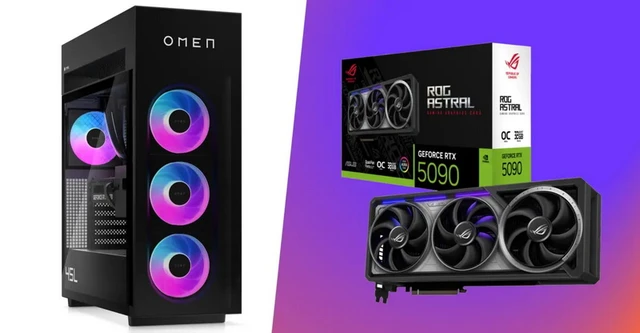 The Economic Paradox of the GeForce RTX 5090