The race to conquer deep space is shifting from theoretical validation to operational reality. SpaceX’s super-heavy lift system, Starship, is gearing up for its thirteenth test flight—a mission poised to be a watershed moment for the program. For the first time, the spacecraft will venture into flight carrying actual technological payloads rather than mere mass simulators. This mission is designed to validate the viability of what stands as the most ambitious transportation architecture of the modern era.
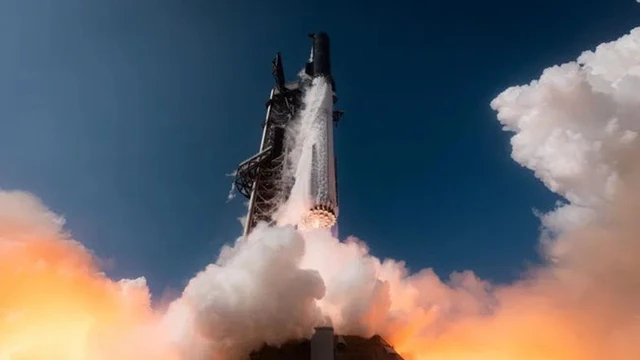
Starship’s thirteenth integrated flight test, slated for July 16, represents a rigorous litmus test for SpaceX’s engineering prowess. This mission will see Ship 40 and Booster 20—both upgraded V3 iterations—take to the skies. The primary objective has shifted from merely validating flight characteristics to demonstrating the system's capacity to deliver actual payloads to a designated altitude.
The technical backdrop of this launch is heavily informed by the lessons learned during Flight 12. In May, engineers encountered a critical failure: following hot-staging, a malfunction in the engine ignition sequence caused the Super Heavy booster to lose attitude control, tilting nearly 90 degrees. A subsequent attempt to correct the course and decelerate failed when five of the thirty-three Raptor engines failed to reignite, stripping the system of its ability to execute a calculated soft splashdown.
To rectify these shortcomings, Flight 13 features a complete overhaul of the engine ignition logic during stage separation. Beyond hardware refinements to the booster itself, SpaceX has optimized emergency shutdown algorithms and warning systems tailored to the complexities of managing such a massive Raptor array. The primary goal for Super Heavy remains a flawless separation, a successful boost-back burn, and a controlled splashdown in the Gulf of Mexico. Notably, the company has opted against attempting a Mechazilla tower catch, mitigating the risk of damaging costly ground infrastructure while vetting the new configuration.
The most pivotal aspect of the mission is the deployment of twenty fully operational Starlink V3 satellites. This marks a transition from mass simulators to flight-ready hardware—a leap to an entirely new generation of spacecraft. Each satellite weighs up to 2.5 tons, triple the mass of previous versions, with solar arrays spanning an impressive 400 square meters.
Intriguingly, a portion of the payload will serve as external observers: six satellites are equipped with specialized cameras designed to monitor the state of Starship’s heat shield during atmospheric reentry. Because the flight path remains suborbital, these satellites will not achieve a stable orbit and will incinerate in the atmosphere approximately twenty minutes after deployment. Nevertheless, this experiment will yield invaluable data on material behavior under extreme thermal stress.
The mission's coda will be the validation of the Raptor vacuum engine and the final phase—a soft splashdown for the ship in the Indian Ocean. Consequently, Flight 13 evolves from a routine test into a comprehensive verification of the entire payload delivery pipeline, from liftoff in Texas to controlled atmospheric reentry.
 A Pragmatic Approach to Lunar Equipment Design