The electric hypercar market is no longer the exclusive domain of a few daring pioneers; it has evolved into a high-stakes arena for the ambitions of global industrial giants. In this race, Tesla—the company that effectively defined the modern landscape of electromobility—is seeking to reaffirm its status as the undisputed technological vanguard. The anticipation surrounding the second-generation Roadster has morphed into a corporate thriller, spanning years of ambiguity and suspense. Now that the countdown has begun, the industry stands poised, awaiting the resolution of one of the most audacious promises of the decade.
The contemporary EV landscape presents a striking paradox: the sports car segment is seeing incursions from companies whose core competencies are entirely unrelated to automotive engineering. Yet Tesla, as the industry's primary trailblazer, cannot afford to fade into the background. Having effectively defined the trajectory of the entire genre, the company's primary objective now is to reclaim its heritage through the reimagined Roadster.
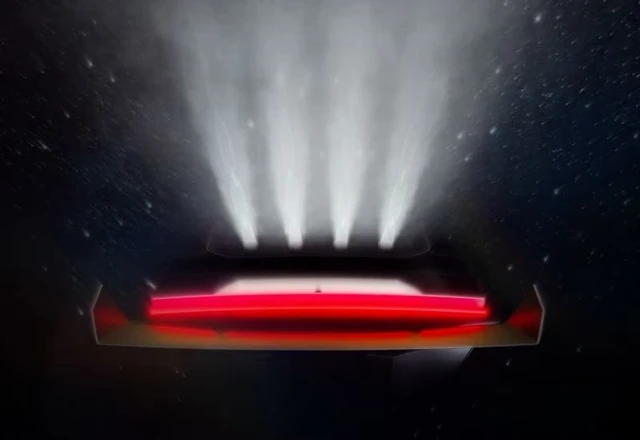
Anticipation surrounding the model has reached a fever pitch following the appearance of a countdown timer on the company's official website, pointing toward October 1st. The accompanying imagery is far from accidental: a red electric vehicle framed by four spotlights that visually evoke jet plumes. This imagery is a direct nod to the company leadership's most audacious claims regarding the vehicle's technical specifications.
One of the most discussed and contentious features of the second-generation Roadster is the purported integration of jet propulsion. This concept transcends the conventional boundaries of automotive transport. These systems are intended not only to facilitate phenomenal acceleration and ensure exceptional stability during high-speed cornering but also to allow the vehicle to briefly achieve lift-off from the road surface. Such an approach demonstrates Tesla's ambition to blur the line between automotive engineering and aerospace technology—a logical progression given the synergy with Elon Musk's other ventures.
The technical specifications announced back in 2017 remain provocative, even when measured against the achievements of today's competitors. We are talking about a range of approximately 1,000 kilometers, 0-100 km/h acceleration in under two seconds, and a top speed exceeding 400 km/h. With a projected price point between $200,000 and $250,000, the vehicle is positioned firmly within the ultra-exclusive hypercar segment.
However, beneath this technological bravado lies a significant struggle with timelines. The first prototype was unveiled nearly nine years ago, and since then, the model has become a textbook example of "vaporware." Initial plans to begin production in 2020 went unrealized, and the industry is now closing in on 2026. The situation is further complicated by the fact that the company has already accepted pre-payments from early adopters, shifting the conversation from marketing promises to fiduciary and reputational liabilities.
Following a series of delays, including a failed announcement in April of this year, October 1st has become the moment of truth. For Tesla, this is more than just a product launch; it is an opportunity to prove that the claimed specifications—from jet thrusters to record-breaking range—are engineering realities rather than mere marketing hyperbole.
 China's Blueprint for Martian Sample Return