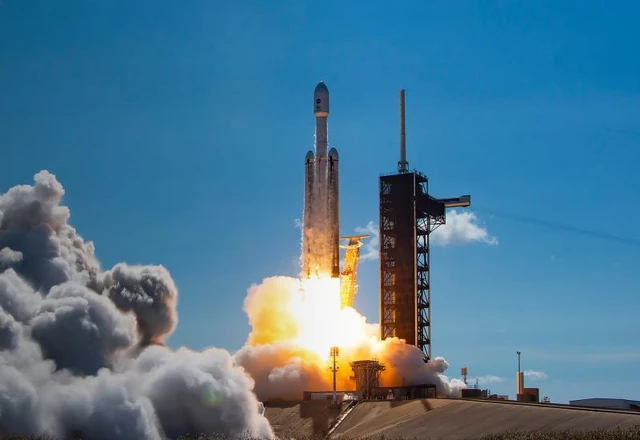
SpaceX’s transition to the public market stands as one of the most anticipated milestones in modern financial history, symbolizing the convergence of interstellar ambition and global capital. The decision by FTSE Russell to fast-track the company’s inclusion in the Nasdaq 100 underscores the singular stature of Elon Musk’s empire. This move does more than merely democratize asset access for millions of investors; it effectively rewrites the traditional playbook of the equity markets. Strategic potential and technological hegemony are now outweighing the immediate demands of short-term profitability.
The trajectory of SpaceX serves as a rare case study in market mechanisms adapting to a singular entity. Traditionally, the journey from an initial public offering (IPO) to inclusion in leading indices is a protracted process; however, for SpaceX, this window was compressed to an absolute minimum. Following its IPO on June 12, the company was integrated into the Nasdaq 100 by July 7. Such an accelerated pace signals a clear intent by exchange operators to provide passive investors with immediate exposure to the capitalization of the most ambitious aerospace project of the modern era.
Essentially, we are seeing the "exceptionalism" principle in action: SpaceX was granted significant concessions regarding both waiting periods and financial benchmarks. While most issuers must demonstrate stability and profitability, SpaceX entered the index while remaining deeply in the red—reporting losses of $4.9 billion over the past year. Nevertheless, market logic has shifted toward valuing future dominance. According to J.P. Morgan analysts, this status could attract up to $4.3 billion in additional capital from passive investors who automatically track index compositions.
Yet, beneath these staggering figures lies a convoluted ownership structure. SpaceX's total valuation, which periodically surges past the $2 trillion mark, may create an illusion of liquidity. In reality, the free float—the volume of shares available for open trading—stands at approximately $100 billion. The lion's share of equity remains concentrated in the hands of Elon Musk, his inner circle, and company employees. This constrained supply, coupled with soaring demand, creates a unique dynamic: even the news of index inclusion triggers an immediate, albeit moderate, uptick in quotes, accompanied by large-scale share transfers.
A fascinating divergence has emerged among the major index providers. While Russell and MSCI are demonstrating flexibility by adapting to the new realities of the tech sector, S&P Global maintains a conservative stance. S&P leadership has stated they have no intention of shortening their vetting period; before SpaceX can be considered for the S&P 500, it must maintain public status for at least 12 months.
This strategic divergence underscores a fundamental clash between the "old guard" of financial analysis, which relies on profit and loss statements, and a "new era" where a company's value is defined by its capacity to reshape civilization. Regardless, its presence in the Nasdaq 100 already opens the doors to the world's largest index funds and institutional portfolios, transforming a private dream of Mars into a standardized asset within the global investment landscape.
 The Expansion of China's 3D NAND Memory Giant