The space industry has definitively shifted from the realm of pure scientific exploration into the arena of high-stakes financial gambling. SpaceX, the vanguard of private aerospace, has collided with a brutal market correction, exposing the inherent vulnerability of tech titans to macroeconomic volatility. The precipitous decline in valuation is a direct consequence of a global reassessment of the cost of borrowing and shifting interest rate expectations. The company is now attempting a delicate financial maneuver, seeking to raise capital via the debt market in an effort to reconcile its cosmic ambitions with a sobering financial reality.
The high-tech asset market has once again proven ruthless toward overextended expectations. Despite the formal success of its IPO, SpaceX has not been immune to the volatility currently sweeping through the growth sector. The catalyst was a surge in U.S. Treasury yields—a clear signal that investors are pricing in an upcoming hike in key interest rates. For companies with multi-billion-dollar valuations predicated on future earnings, such shifts can prove fatal in the short term.
The results were staggering: over three trading sessions, SpaceX shares entered a steady decline, culminating in a further 12% plunge on Monday. This triggered the instantaneous evaporation of $400 billion in market capitalization. When measured against the local peak of $3 trillion recorded on June 16, it becomes evident that the company has shed nearly a third of its value. According to Bloomberg, this single-day collapse stands as the second-largest such event in the history of the U.S. stock market.
Amidst this turbulence, SpaceX leadership is pivoting toward the debt market, planning a $20 billion bond issuance with maturities ranging from 5 to 30 years. From the perspective of classical financial analysis, the move appears paradoxical: a company that has only recently gone public and remains unprofitable is attempting to secure a colossal volume of borrowed capital. However, there is a distinct logic to Elon Musk's strategy. The IPO was a necessary prerequisite to establish a credit rating and create the formal framework required to issue debt instruments. Now that the infrastructure is in place, the company seeks to minimize equity dilution, preferring bond loans over the sale of new share tranches.
Nevertheless, investor appetite for SpaceX bonds may be significantly lower than for its shares. IPOs are typically driven by intense hype, allowing investors to capitalize on rapid price appreciation. Bonds, by contrast, are conservative instruments offering fixed income and the return of principal at maturity. Given that SpaceX does not expect to reach its break-even point until 2029, long-term papers appear risky. A BBB credit rating from three leading agencies only confirms the company's status as a moderate-risk borrower, which, in the current climate, hardly makes it a "safe haven."
That said, SpaceX's financial foundation remains formidable, with approximately $100 billion in cash and highly liquid equivalents on hand. The planned $20 billion bond issuance has a specific objective: refinancing the loan used to acquire the AI startup xAI. This connection underscores Musk's ambition to create a synergy between aerospace technology and artificial intelligence, even if it increases the overall debt load, which currently stands at $29.1 billion.
S&P analysts believe that to fully cover its capital expenditures, SpaceX will have to continue employing a hybrid strategy of equity sales and bond issuances. However, the company is also exploring alternative revenue streams beyond rocket launches. A promising frontier is the leasing of its own data centers in Tennessee. This strategy transforms SpaceX into an infrastructure play; four major tenants have already secured a payment stream that could exceed $81 billion by 2029. Consequently, the expansion into cloud computing and AI infrastructure is becoming the very financial lever intended to ensure the long-term stability of Musk's empire.
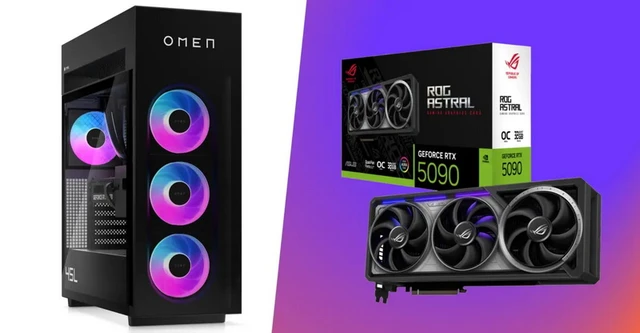 The Economic Paradox of the GeForce RTX 5090