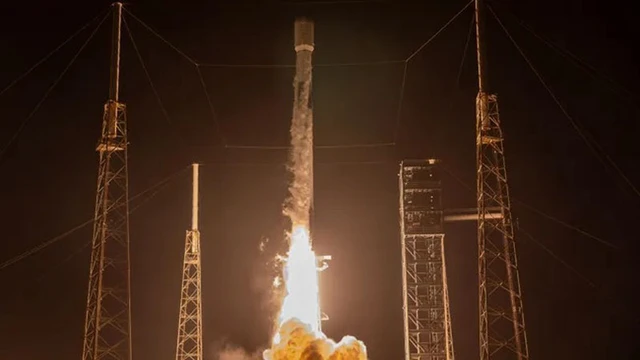
The global landscape of tech titans is currently weathering a period of heightened turbulence, leaving even the most ambitious players susceptible to the pressures of market correction. SpaceX, long characterized by its meteoric ascent, has encountered its first significant valuation trial since its public debut. A brief dip in share prices below the psychological threshold of $150 served as a barometer for broader investor anxiety. This episode underscores the precarious equilibrium between technological optimism and the uncompromising rigors of financial accountability.
Following the meteoric rise that characterized its IPO period, SpaceX's growth momentum has begun to wane. This week, the market witnessed a landmark event: the company's share price dipped below the $150 mark for the first time since its public debut. According to Forbes, trades hit a low of $149 per share before partially recovering to $156.
The scale of the current downturn is striking when viewed in retrospect. Since peaking at $226 on June 16, the stock has plummeted nearly 34%. In monetary terms, this represents a loss in market capitalization of approximately one trillion dollars—a sum comparable to the GDP of many developed nations.
This volatility has led to a significant reshuffling of SpaceX's standing in the global rankings of the world's largest companies. Just a week ago, the company held a firm fourth place, surpassing titans such as Amazon and Microsoft in terms of market cap. However, following the correction, it has slipped to seventh, maintaining an edge only over Broadcom, which is valued at $1.8 trillion.
It is worth noting that SpaceX's decline is not an isolated incident but rather aligns with a broader downward trend across the U.S. tech sector. JPMorgan analysts attribute this shift to pervasive market anxiety as investors anxiously await Micron Technology's quarterly report. As Micron serves as a bellwether for the semiconductor and memory markets, any deviation in its performance could trigger a ripple effect throughout the entire high-tech sector.
For Elon Musk, these market fluctuations, while substantial, have not been critical. The dip in SpaceX's share price shaved approximately $41.7 billion off his personal fortune. Nevertheless, relative to his total net worth, this loss has not stripped him of his status as a trillionaire, underscoring that even colossal volatility in individual assets cannot fundamentally destabilize the financial bedrock of one of the world's wealthiest individuals.
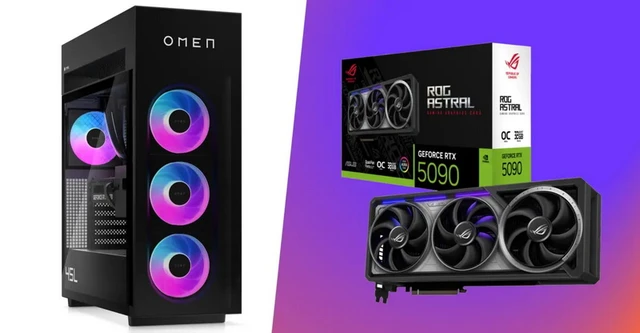 The Economic Paradox of the GeForce RTX 5090