The global space race is increasingly evolving into a strategic battle over critical materials and supply chain security. A heavy reliance on rare elements, such as germanium, has created systemic vulnerabilities across the satellite constellation industry and interplanetary missions alike. Rocket Lab’s new IMM Apex technology disrupts this cycle, offering a solution that completely eliminates the need for these scarce substrates. This transition does more than just secure technological sovereignty; it fundamentally redefines the benchmarks for efficiency and mass in orbital power systems.
For years, the aerospace industry has leaned on a rigid manufacturing standard for high-efficiency multi-junction solar cells. In the classical GaInP/GaAs/Ge architecture, semiconductor layers are grown on a germanium substrate, which serves as the foundation and ensures perfect crystal lattice alignment. However, this dependency has evolved into a critical single point of failure; as germanium supplies from China face potential restrictions, a technical standard has been transformed into a tool for geopolitical leverage.
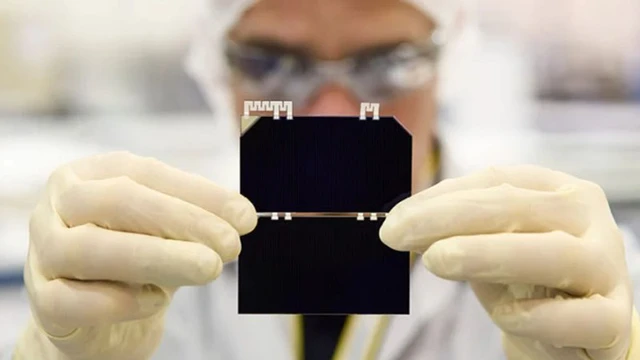
The strategic response to this challenge is IMM Apex, powered by Inverted Metamorphic (IMM) architecture. Unlike traditional methods, the semiconductor layers are grown in reverse order. To compensate for the lattice mismatch between different materials, engineers employ specialized buffer layers. Once the functional structure is established, the original substrate is simply removed. The result is a pure, high-performance photovoltaic cell entirely free of germanium.
This technical leap transcends mere supply chain autonomy, delivering tangible performance gains. Laboratory conversion efficiency has reached 31.5%, while the weight of the cell is reduced by approximately 40% compared to traditional triple-junction counterparts. In the vacuum of space, where every gram of payload carries a premium, such optimization is transformative: it allows operators to either significantly lower launch costs or increase the system's total electrical power without increasing the structural weight.
A pivotal element of IMM Apex’s commercialization is its seamless compatibility. The technology is engineered as a drop-in replacement for existing components, meaning satellite manufacturers do not need to overhaul their power system concepts or redesign their array structures. This shifts the innovation from a theoretical achievement to a market-ready industrial product capable of rapid scaling.
It is worth noting that the concept of inverted metamorphic cells is not a novelty for Rocket Lab. This approach has already been battle-tested in the harshest environments: similar technologies powered NASA's Ingenuity Mars helicopter and have functioned successfully on orbital assets for over a decade.
Today, IMM Apex is transitioning to full-scale serial production at the company's facility in Albuquerque, New Mexico. Rocket Lab plans to produce hundreds of kilowatts of capacity annually, providing power for both commercial satellite constellations and government scientific programs, effectively liberating space energy from the grip of resource monopolies.
 Samsung M16: A New Standard for OLED Panels