The global AI arms race has transformed computing memory from a supporting component into a strategic asset of national importance. In a bid to cement its status as the world's preeminent tech hub, South Korea is initiating an unprecedented expansion of its production capacities. Central to this strategy are industry titans Samsung Electronics and SK hynix, whose investments are aimed at securing the region's technological sovereignty. However, this aggressive growth has triggered justifiable concerns within financial markets, which are increasingly wary of a potential correction in the "AI boom."
The current era of generative AI is exerting unprecedented pressure on memory bandwidth and capacity. High-speed solutions, such as High Bandwidth Memory (HBM), have emerged as critical nodes in the neural network value chain, forcing industry leaders to fundamentally reassess their capital expenditure strategies. In this climate, the South Korean government, in collaboration with the market's primary stakeholders, has unveiled a sweeping plan to modernize the nation's industrial base.
While initial market rumors suggesting a $1.3 trillion investment proved somewhat exaggerated, the official figures remain staggering: over $590 billion will be poured into infrastructure development over the next decade. This capital injection is designed to achieve an ambitious objective—doubling domestic memory production within just five years.
Seoul's strategy extends far beyond a mere increase in wafer production. The goal is the creation of a comprehensive ecosystem where semiconductor fabrication is tightly integrated with the evolution of data centers and advanced robotics. This initiative involves more than just chip giants; corporations like Hyundai Motor are also playing a key role. The synergy with the Boston Dynamics-owning automaker signals a long-term strategic pivot toward "embodied AI"—physical entities that will require massive memory reserves to process data in real time.
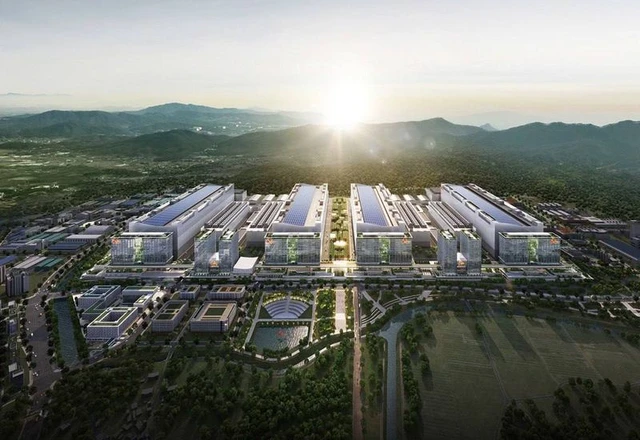
The geographical distribution of these new capacities is meticulously planned for logistics and specialization. In Gwangju, in the southwest, the plan includes the construction of four to five massive chip fabrication plants. Samsung Electronics will focus on establishing specialized memory packaging facilities in the south, a move critical for the advancement of 3D chip stacking. Meanwhile, SK hynix intends to expand its NAND flash production capabilities in the north, cementing its position in the non-volatile memory segment.
However, this aggressive expansion has been met with investor caution, reflected in a share price drop of over 5% for both companies. The semiconductor market is historically plagued by severe cyclicality, where periods of acute shortage are inevitably followed by crises of overproduction.
Today, financial analysts are questioning whether the current surge in demand for AI infrastructure is a transient bubble. Massive capital investments in fabrication plants—which take years to build—create a systemic risk: by the time they are operational, the market may be oversaturated, leaving expected profits out of reach. Consequently, South Korea is placing one of the costliest bets in industrial history, attempting to strike a precarious balance between technological hegemony and economic volatility.
 The Evolution of the Apple Home Ecosystem