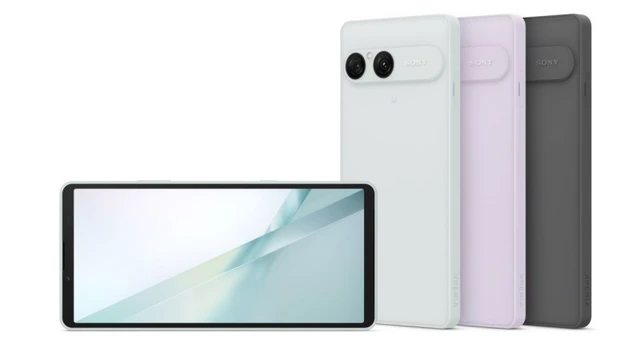
The contemporary mid-range smartphone market has evolved into a battlefield where aggressive spec-bumps clash with cautious, incremental iterations. Sony continues to follow its own, almost ritualistic path, prioritizing stability and ergonomics over the relentless pursuit of benchmark numbers. The debut of the Xperia 10 VIII underscores the Japanese brand's profound conservatism, delivering a device that is, for all intents and purposes, a cosmetic refresh of its predecessor. This approach betrays a clear intent: to craft a highly predictable tool for the user who is not driven by the urge to upgrade their hardware every year.
The Japanese tech giant has unveiled the Xperia 10 VIII—a device that raises more questions about its value proposition than it sparks excitement over new features. Priced at €599, the handset is essentially a refined iteration of last year's Xperia 10 VII. In an era where competitors strive for meaningful innovation every twelve months, Sony has opted for a strategy of incremental adjustments, focusing on polishing existing solutions rather than reinventing them.
The visual experience is driven by a 6.1-inch LTPS OLED display featuring Full HD+ resolution and a 120Hz refresh rate. The use of LTPS (Low-Temperature Polycrystalline Silicon) technology allows Sony to strike an ideal equilibrium between power consumption and image quality—a critical factor for compact devices. While the company claims a 50% increase in screen brightness, the absence of specific peak nit values leaves room for skepticism. Nevertheless, the form factor remains unchanged: the signature top and bottom bezels continue to house the front-facing stereo speakers, which engineers claim are now 30% more powerful.
Under the hood, the Xperia 10 VIII evokes a mixed response. The device is powered by the Qualcomm Snapdragon 6 Gen 3—a chipset that ensures reliable performance for everyday tasks but makes no claim to performance leadership. This is paired with 8GB of RAM and 128GB of internal storage. In an era of exponential data growth, the inclusion of a microSD card slot remains one of the device's primary strengths, allowing users to expand storage without paying a premium for higher-capacity models.
The camera array remains virtually identical to the previous generation. The primary focus is on a 50-megapixel sensor with a physical size of 1/1.56 inches, complemented by a 13-megapixel ultra-wide module. This approach suggests that Sony views its current mid-range photography blueprint as sufficient and sees little reason for a radical optical overhaul.
Sony’s steadfast commitment to tradition is particularly noteworthy: the 3.5mm headphone jack has been retained. Amidst the industry-wide pivot toward wireless interfaces, this detail makes the smartphone highly attractive to audiophiles and those who value the reliability of a wired connection. Endurance is handled by a 5,000 mAh battery which, combined with an energy-efficient processor and moderate screen resolution, guarantees prolonged operation. However, the charging speed, capped at 30W, appears underwhelming when measured against modern fast-charging standards.
On the software front, the device runs Android 16 with Sony’s minimalist skin, which barely obscures the clean nature of the native interface. A key strategic move is the commitment to four years of OS updates, which effectively validates the conservative hardware strategy—the device is engineered for a long lifecycle. The Xperia 10 VIII is expected to hit shelves in late September, serving as a litmus test for whether consumers are willing to pay for stability and ergonomics over raw technological progress.
 The Engineering Pragmatism of the Wildcat Lake Series