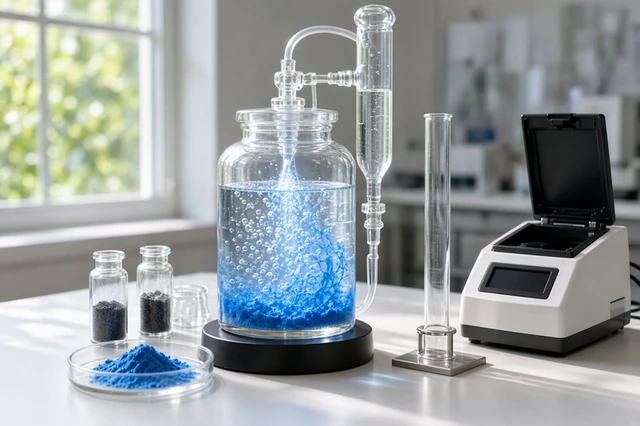
The shift toward a hydrogen economy necessitates the discovery of scalable, sustainable, and cost-effective methods of fuel production. While the ocean provides a virtually limitless resource, its practical application is hindered by extreme corrosivity and the presence of toxic contaminants. A breakthrough by researchers in Singapore offers an elegant solution, seamlessly integrating energy generation with advanced environmental remediation. This "artificial leaf" converts solar energy into chemical fuel while simultaneously neutralizing hazardous industrial waste.
The concept of the "artificial leaf" has long evolved beyond theoretical curiosity, aiming to replicate natural photosynthesis to solve global energy challenges. The latest breakthrough from researchers at Nanyang Technological University centers on the development of a photoelectrochemical device capable of autonomous operation, powered exclusively by solar radiation. Unlike traditional electrolysis, which requires an external power source, this system functions as a unified converter, transforming photons of light directly into the chemical bonds of hydrogen.
The primary technological hurdle when working with seawater is the aggressive chemical environment and the prevalence of parasitic side reactions. In conventional electrolysis, the anode triggers oxygen evolution, a process that demands significant energy expenditure. The developers pivoted toward a different strategy: integrating the decomposition of hydrazine—a toxic industrial pollutant—into the process. In this system, the anodic reaction is geared toward splitting hydrazine, releasing nitrogen and additional hydrogen. This approach not only lowers the energy threshold of the process but also transforms a hazardous waste product into a valuable resource.
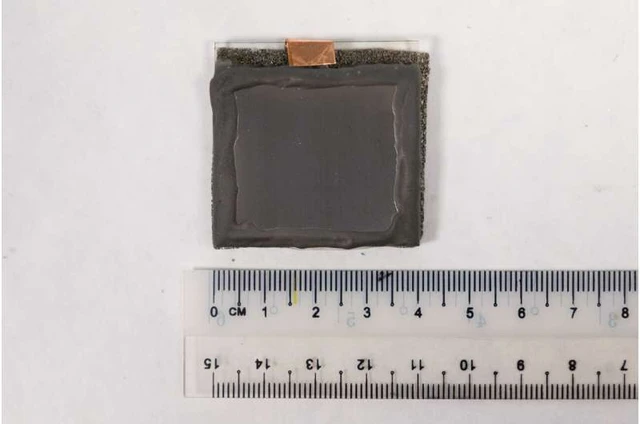
The architectural heart of the device is a photocathode based on lead-halide perovskites. Perovskites are renowned for their exceptional light-absorption efficiency and charge-carrier generation; however, they are notoriously unstable when in contact with water. To prevent material degradation, the engineers implemented a sophisticated multilayer protective shield: titanium foil paired with a conductive epoxy composite reinforced with silver and copper particles. This created a hermetic, durable interface capable of withstanding the corrosive effects of saline water.
Particular attention was paid to the anode, which utilizes a catalyst composed of iron, cobalt, and chromium. This specific metallic combination addresses one of the most critical issues in direct seawater electrolysis: the evolution of toxic chlorine gas. The precisely engineered composition of the catalyst suppresses the chlorine reaction, ensuring the chemical purity of the process and providing robust corrosion resistance.
The system's efficiency is backed by rigorous metrics. During testing, the device demonstrated a photocurrent density of 25 mA/cm². Under light intensity simulating a clear sunny day, the system maintained stability for over 72 hours, achieving a hydrogen generation rate of 466 $\mu$mol/(cm²·h).
However, the most impressive result was the degree of water purification. Over 30 hours of operation, the hydrazine concentration plummeted from 0.5 mol (approximately 1.6% by weight) to a critically low level of 0.5 parts per billion (ppb). This value is twenty times lower than the stringent standards set by the US Environmental Protection Agency (EPA), effectively signifying the complete neutralization of the pollutant.
This precedent paves the way for an entire class of "beneficial remediation" devices. The future lies in the development of novel catalysts capable of extracting other types of industrial contaminants from oceanic water, converting them into fuel or chemical feedstock. In this paradigm, the ecological restoration of the ocean ceases to be a mere expense and instead becomes a source of energy profit.
 The Industrial Carbon Utilization Cycle in Europe