The semiconductor industry has reached a critical inflection point where the physical limitations of silicon now demand a paradigm shift in innovation. Apple is meeting this challenge head-on with a new generation of silicon designed to redefine the boundaries of both mobile and professional computing. The introduction of a 2-nanometer process and quad-die configurations signals a transition toward an era of edge-AI dominance and unprecedented computational density. These advancements represent more than a mere iterative update; they constitute a strategic pivot toward a future where hardware and neural networks converge into a single, seamless entity.
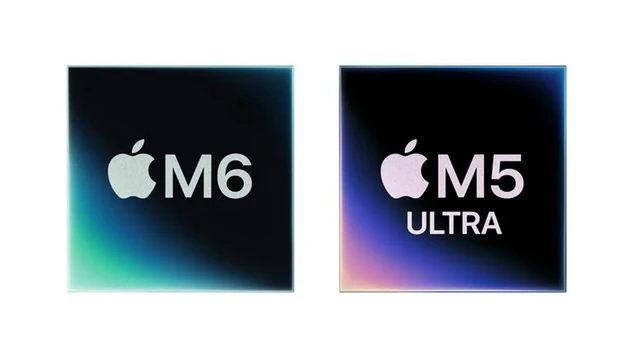
Apple's technological stack has taken a quantum leap with the debut of the M6 processor, the company's first chip engineered on a 2-nanometer process node. This transition is far more than a marketing play; it represents a profound engineering optimization. By increasing transistor density, Apple has simultaneously pushed clock speeds higher while reducing power consumption—a critical balance for maintaining the synergy between raw performance and battery longevity. Particular emphasis has been placed on neural computing: two 16-core Neural Engine blocks now operate in tight synchronization, accelerating AI workloads directly on-device and bypassing the need for cloud services.
The M6 CPU features a 12-core configuration, comprising two ultra-powerful "super-cores," four performance cores, and six efficiency cores. This architecture enables peak single-threaded performance, while multi-threaded scenarios demonstrate a gain of up to 20% over its predecessor, the M5. The graphics subsystem has evolved similarly: the 12-core GPU now integrates dedicated neural accelerators, boosting peak AI performance by nearly 30%. Furthermore, updated shader cores, optimized Dynamic Caching, and hardware-accelerated ray tracing have increased geometry processing speeds by 50%.
In terms of memory, the M6 supports up to 32GB of unified memory with a bandwidth of 170 GB/s. While this chip serves as the heart of the refreshed Mac mini, Apple's current strategy is unconventional. The company has opted to skip the intermediate M6 Pro and M6 Max iterations, planning instead for a direct leap to the M7 generation by mid-2027.
Alongside the mainstream M6, Apple has unveiled the M5 Ultra—a true computational powerhouse designed for the Mac Studio. Unlike the M6, it utilizes a 3-nanometer process, but its defining innovation is a quad-die architecture. Leveraging UltraFusion technology, Apple has fused two dual-die M5 Max modules into a single logical processor. An interconnect bandwidth exceeding 4.4 TB/s and a sixfold increase in interconnect density allow these four dies to function as a monolith, effectively erasing the boundaries between physical modules.
The M5 Ultra's raw power is staggering: up to 36 CPU cores, 12 of which are super-cores. Compared to the M3 Ultra, single-threaded performance has increased by 25%, with multi-threaded gains reaching 30%. However, the most significant leap is in the graphics segment. The 80-core GPU, equipped with its own neural accelerators, delivers a 4.5x increase in AI task performance over the M3 Ultra and more than a sixfold increase compared to the original M1 Ultra. In traditional graphics workloads, the performance uplift is approximately 40%.
The M5 Ultra's crowning achievement is its support for a massive amount of unified memory—up to 512GB with a bandwidth of 1.2 TB/s. This transforms the workstation into a full-fledged server capable of running Large Language Models (LLMs) with hundreds of billions of parameters entirely within local RAM.
Completing the package are a 32-core Neural Engine and a modernized media engine. With hardware support for H.264, HEVC, four ProRes encode/decode blocks, and AV1 support, this chip is an uncompromising tool for professional video production and 3D rendering, all while maintaining industry-leading power efficiency.
 The Economic Paradox of the GeForce RTX 5090