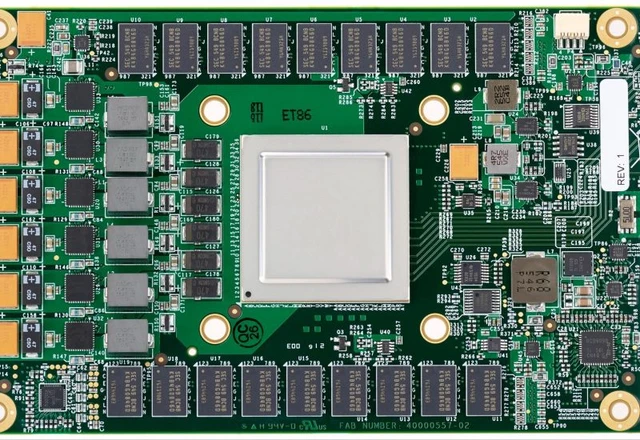
The global AI arms race has fundamentally shifted its focus, moving beyond algorithmic refinement toward physical manifestation: the engineering of specialized silicon. Over-reliance on a single provider of compute capacity has evolved into a critical strategic vulnerability for the world’s leading AI laboratories. In a bold move toward hardware sovereignty, Anthropic is initiating the development of its own proprietary AI accelerators. This pivot signals a broader industry shift toward total vertical integration—a paradigm where software and silicon are co-engineered as a single, unified ecosystem.
In the contemporary hierarchy of Large Language Model (LLM) development, hardware sovereignty has emerged as a strategic asset on par with the quality of training datasets. Anthropic, a vanguard in AI safety and efficiency, has embarked on its own specialized silicon initiative. The company is currently in negotiations with Samsung, viewing the Korean giant not merely as a foundry, but as a strategic partner for implementing cutting-edge semiconductor packaging technologies.
Of particular note is the pivot toward a 2-nanometer process. Transitioning to such minuscule nodes allows for a radical increase in transistor density and a significant reduction in power consumption—factors that are critical for training next-generation models, where the cost of a single training cycle can reach millions of dollars. The advanced packaging solutions offered by Samsung are designed to alleviate the "memory bottleneck," ensuring high-speed data exchange between compute cores and High Bandwidth Memory (HBM).
To fuel these ambitions, Anthropic is aggressively poaching talent, assembling a team of engineers from the industry's most clandestine projects. A pivotal acquisition is Clive Chan—a specialist who was instrumental in OpenAI's custom chip program and previously contributed to the development of Tesla's Dojo supercomputer. His appointment underscores the company's resolve: Anthropic aims to integrate best-in-class design practices for specialized accelerators, optimizing computation for the specific mathematical operations inherent to neural networks.
Nevertheless, the project remains in its infancy. The detailed die design has yet to be finalized, and mass production has not commenced. Internally, Anthropic maintains a pragmatic stance: proprietary hardware is viewed as a supplement to existing infrastructure rather than a wholesale replacement. The company's strategy remains multi-vendor; Nvidia GPUs, Google TPUs, and AWS Trainium chips continue to play central roles.
This trajectory mirrors a broader industry trend. OpenAI has already partnered with Broadcom to design its own silicon, introducing the "Jalapeño" inference chip. Similar strategies are being deployed by Microsoft, Amazon, and Google as they seek to slash operational expenditures on capacity leasing and decouple from external suppliers.
Yet, the central paradox of the modern industry is that despite this pivot toward proprietary silicon, Nvidia's hegemony only intensifies. Current estimates place the company's share of the AI accelerator market at approximately 74%. This suggests that even with internal developments, the industry remains tethered to the CUDA ecosystem and the proven performance of the H100/B200, positioning custom chips as tools for optimizing specific bottlenecks rather than viable alternatives to the market leader.

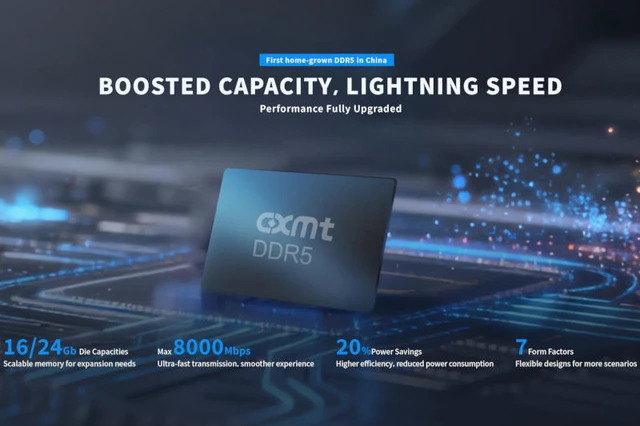 The Price of Acceleration: CXMT’s Rapid Push into Memory