The hospitality industry is poised for a fundamental paradigm shift, as traditional human-centric service gives way to the clinical precision of algorithms. China has emerged as the primary proving ground for this experiment with the development of the world’s first fully robotic hotel. This initiative transcends the mere automation of discrete functions; it represents the creation of a holistic environment driven by embodied intelligence. By 2027, the project is slated to become the global benchmark for how artificial intelligence orchestrates physical spaces in real time.
On the West Artificial Island of the Shenzhen-Zhongshan Bridge-Tunnel in Guangdong Province, a project is taking shape that fundamentally reimagines the concept of hospitality. A joint venture between Pudu Robotics and the Shenzhen Culture & Tourism Industry Development organization is developing an autonomous 44-room complex—complete with a restaurant and gym—where human intervention is entirely removed from operational processes.
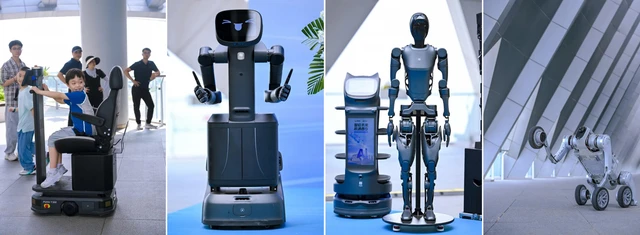
Operational duties are distributed across specialized hardware, transforming the hotel into a single, synchronized mechanism. Heavy logistics are handled by the Pudu T300, which boasts a payload capacity of up to 300 kg to ensure seamless luggage transport. Express food and beverage delivery is delegated to FlashBot, integrated directly with guest smartphones for instantaneous order fulfillment. Meanwhile, maintaining cleanliness and hygiene falls to the CC1 Pro and MT1 models, designed to navigate and interact effectively within dynamic interior environments.
However, the project's true value lies not in the hardware, but in its cognitive management layer. The hotel is powered by PuduFM 1.0—a foundational Embodied AI model—and the PuduAgent platform. Moving beyond traditional robots governed by rigid scripts, the system employs a Vision-Language-Action (VLA) architecture. This technology enables the system to simultaneously process visual streams, interpret linguistic commands, and translate them into precise physical actions.
This approach creates a unified intelligent environment where diverse robotic units communicate and adapt to their context in real-time. Reception robots do more than just read data; they recognize human speech, gestures, and social behavioral patterns to simulate natural interaction. Simultaneously, logistics units autonomously optimize their routes based on corridor traffic, while cleaning systems adjust their operations according to the level of contamination or the repositioning of furniture.
The implementation of such an ambitious project follows a phased deployment strategy. A pilot launch with a limited number of rooms is expected by late 2026 to refine the interaction between VLA models and physical infrastructure. Full-scale operations will commence in 2027, marking the transition from the concept of a "smart hotel" to a fully realized autonomous service ecosystem.
 The Price of Acceleration: CXMT’s Rapid Push into Memory