The global AI arms race has long since shifted from a battle of algorithms to a struggle over physical infrastructure. Stringent US export controls, aimed at stifling China's technological ascent, have triggered a paradoxical outcome: the emergence of one of the most lucrative shadow markets in the history of semiconductors. An investigation into the operations of logistics behemoth Apex Logistics exposes deep-seated systemic vulnerabilities within global supply chains. Now, the fallout extends beyond the end-users to the logistics operators themselves—the very architects of these clandestine workarounds.
In the current geopolitical climate, high-performance GPUs have evolved into strategic assets, mirroring the criticality of oil or rare earth elements. Since 2022, Washington has systematically tightened the screws, restricting Beijing's access to cutting-edge Nvidia accelerators to thwart their application in military hardware and autonomous weapons systems. In practice, however, state-mandated prohibitions have proven surprisingly porous, bypassed through intricate logistical maneuvers and the use of front companies.
The spotlight of U.S. regulators has now fallen on the Singapore-based firm Apex Logistics. This case could set a perilous precedent for the transport sector: for the first time, regulators are attempting to hold a logistics operator accountable for export control violations. Investigators are scrutinizing how Supermicro hardware, powered by Nvidia's most potent chips, found its way into Chinese hands despite official bans.
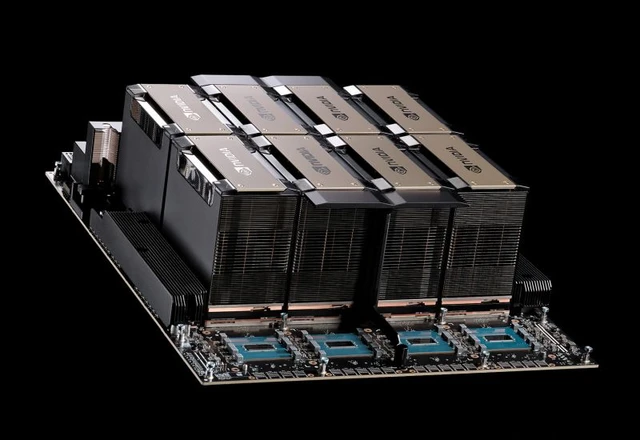
There is a certain irony here, recalling the public remarks of Nvidia CEO Jensen Huang. Last May, he skeptically noted that Grace Blackwell systems weigh nearly two tons, making it impossible to smuggle them "in a pocket or a backpack." Technically, Huang was correct: modern AI servers are massive rack-mounted units requiring specialized power and cooling. However, he underestimated the capabilities of professional logistics. Apex Logistics, specializing in oversized and ultra-heavy cargo, possesses the precise toolkit required for the discreet transport of such assets, ensuring both protection and camouflage.
The mechanism for circumventing these restrictions was a multi-stage labyrinth. Preliminary data suggests the equipment followed a convoluted route: from Taiwan to the U.S., then to a Southeast Asian hub, before heading to Hong Kong and finally entering mainland China. The critical phase was the transit from the U.S. to Asia, where the cargo was effectively "legalized."
The primary instrument of manipulation was the use of commodity classification codes. In international trade, these codes determine whether a product falls under sanctions or export controls. Investigators found that 47 suspicious shipments utilized codes indicating no such restrictions. It is alleged that these entries were manipulated by two former Apex employees, who essentially engineered a "green corridor" for smuggling. In some instances, these were massive consignments—up to 60 servers per shipment—transforming the operation from petty theft into a full-scale industrial supply chain.
Apex Logistics and its parent company, the Swiss giant Kuehne+Nagel, have maintained a cautious stance, expressing a willingness to cooperate with the investigation. The company claims it relied on client-provided data and internal codes, lacking full visibility into the actual contents of the containers. This underscores a fundamental flaw in modern compliance: logistics firms often act as "blind" intermediaries, formally adhering to documentation while effectively facilitating the delivery of prohibited technology.
Nvidia, for its part, has distanced itself from the scandal, emphasizing its commitment to working only with vetted partners. Yet, the very existence of such a vast shadow market demonstrates that China's appetite for computational power is so immense that it outweighs any risk of criminal prosecution. When technological dominance in AI is the prize, the cost of logistical risk becomes merely another acceptable operational expense.
 iPhone 17: Dominating the Global Market