Real-time network traffic monitoring often necessitates a delicate balance between data granularity and interface stability. Most third-party Windows widgets are plagued by integration flaws, frequently flickering or becoming obscured by system elements during interactions with the OS shell. NetSpeedTray 2.0 resolves these issues by fundamentally reimagining the logic governing the interaction between its graphical layer and the taskbar. Consequently, the tool transcends the role of a standard application, evolving into a seamless extension of the user interface.
Launched in February 2025, NetSpeedTray is an open-source network monitoring solution developed in Python and distributed under the GNU GPL v3.0 license. With the release of versions 2.0.0 and 2.0.1, the development team has pivoted away from mere feature expansion, focusing instead on achieving a "seamless" integration with Windows 10 and 11.
The most significant architectural shift lies in how the widget is rendered. In earlier iterations, data was displayed in a separate window programmatically pinned above the taskbar—a method that introduced several visual glitches, such as flickering when focusing on a command shell or disappearing entirely upon opening the Start menu. The current release implements a Z-order management system that hard-pins the widget to the taskbar. Consequently, the tool now behaves like a native system component, remaining stable during Windows Explorer restarts, monitor reconfiguration, and system sleep cycles.
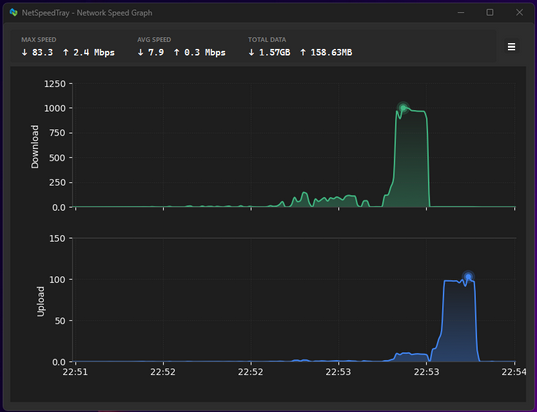
The core architecture of NetSpeedTray is engineered for minimal resource overhead. Of particular note is the "Dynamic Refresh Rate" mechanism, which throttles program activity during periods of network inactivity—a critical optimization for laptop battery longevity. The visual interface has been aligned with modern Windows design standards: intelligent light and dark theme detection ensures legibility across environments, while adaptive positioning allows the widget to shift automatically, making room for new icons in the system tray.
From an analytical perspective, the tool offers a robust suite of capabilities. The monitoring system can autonomously identify the primary internet connection, filtering out noise generated by virtual adapters. For granular traffic analysis, a logarithmic scale has been implemented, allowing users to simultaneously track minute idle fluctuations and massive activity spikes. Users maintain flexible control over measurement units (ranging from bps to Mbps), typography, and color thresholds for rapid visual status checks. All telemetry is stored in an optimized database featuring automated cleanup and CSV export functionality for deeper post-analysis.
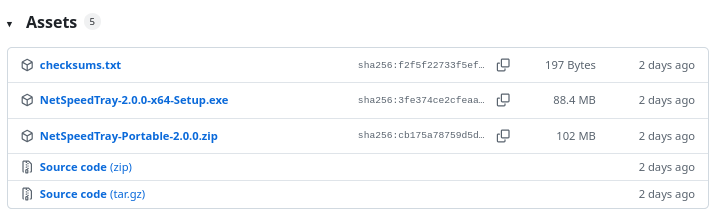
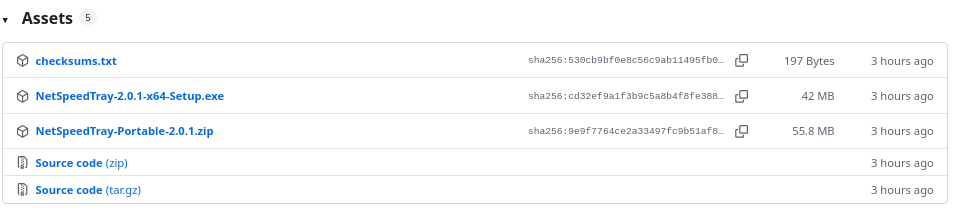
The evolution of version 2.0 also reflects a maturation in the project's engineering rigor. The team has implemented its first full Continuous Integration (CI) pipeline, and test coverage has surged nearly fourfold—increasing from 196 to 722 tests—significantly enhancing overall product stability. Furthermore, the build process has been optimized; the footprint of the standalone version has been halved by eliminating redundant files within the package structure.
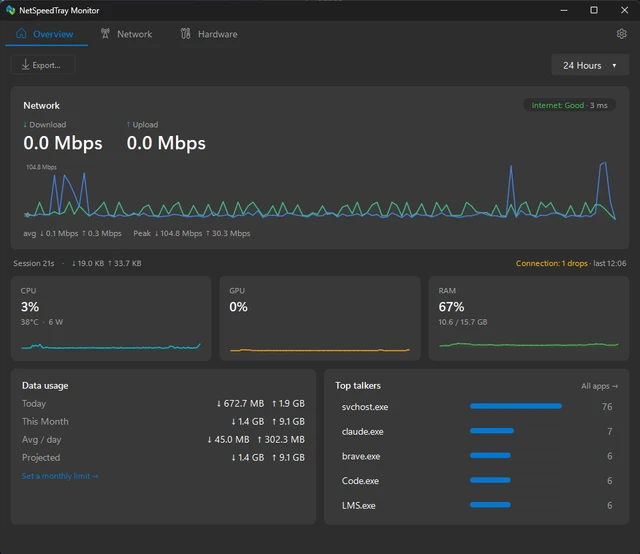
The centerpiece of the update is the redesigned "Monitor." Replacing a fragmented array of windows, the tool now utilizes a unified interface divided into three tabs: Overview, Network, and Hardware. This module correlates network latency and per-application traffic with real-time CPU, RAM, and GPU load. By utilizing a single graphics engine and a shared timeline, NetSpeedTray allows users to pinpoint exactly how spikes in network activity correlate with hardware resource consumption.
 The Hidden Survival Mechanism of NeXT