The global race for AI supremacy has shifted decisively from the realm of algorithms to the domain of hardware. Today, computational power has become the most valuable currency of the digital economy, creating an unprecedented chasm between production capacity and market demand. At the epicenter of this transformation is Nvidia, whose products have evolved into a critical strategic asset for the world's largest corporations. Current market dynamics suggest that we are merely at the dawn of a massive, systemic infrastructure cycle.
The current market for machine learning accelerators is exhibiting anomalous dynamics: demand for Nvidia chips outweighs supply by more than twelvefold. This critical imbalance signals a systemic "compute famine"—a hunger for processing power that cannot be satiated through simple production scaling. For investors and analysts, this serves as a clear indicator of sustained capitalization growth potential, as the market has yet to fully price in the sheer scale of this shift.
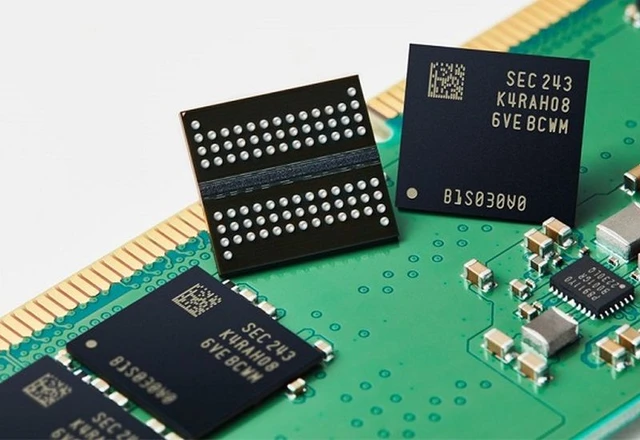
The primary catalysts are the "hyperscalers"—the tech titans building the foundation for cloud computing and Large Language Model (LLM) training. Giants like Alphabet and Amazon are aggressively revising their capital expenditures upward, with investment forecasts reaching $200–$220 billion. This aggressive infrastructure build-out is driven not only by the demand for GPUs themselves but also by the escalating cost of High Bandwidth Memory (HBM), which has become a critical bottleneck for modern GPU performance. Meanwhile, Microsoft is playing the long game, aiming for positive free cash flow by fiscal year 2027 through the deep integration of AI services.
Nvidia’s financial metrics solidify its position as the primary beneficiary of the generative AI era. For the first quarter of fiscal year 2027, revenue surged by an impressive 85% year-over-year, while net profit more than tripled. Notably, this meteoric rise in operational performance has not yet been fully reflected in share prices, which have seen only moderate growth since the start of the year. This divergence between business fundamentals and market valuation creates a prime setup for a new rally.
However, the true potential for expansion lies beyond conventional chatbots and image generators. On the horizon is "Physical AI"—the integration of artificial intelligence into physical entities. The development of humanoid robotics and autonomous transport will demand qualitatively new volumes of computation, processed both at the edge (edge computing) and within specialized data centers.
Consequently, the current chip shortage is not a temporary logistical glitch, but rather the result of a fundamental paradigm shift in technological evolution. As demand continues to outpace supply by orders of magnitude, Nvidia maintains its status as the monopolist in the most critical niche of the decade, securing sustainable growth for years to come.

 Forecasting Exponential Growth in Nvidia Shipments