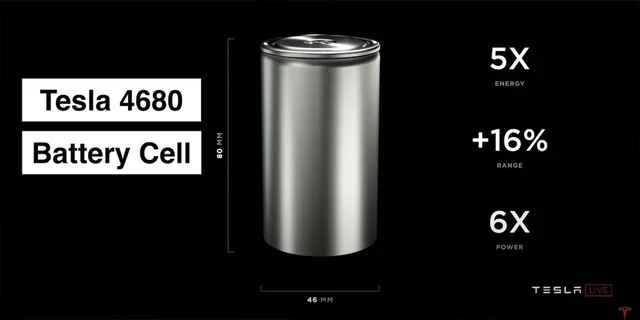
The global shift toward electric mobility is currently bottlenecked by a single fundamental challenge: the efficiency and cost of battery cell production. In a pursuit of total vertical integration, Tesla has bet heavily on its proprietary 4680 cell format, designed to drastically slash manufacturing overheads. Yet, the road to mass-scale production has proven more arduous than anticipated, effectively transforming the Berlin Gigafactory into a proving ground for technological experimentation. The launch of the "Cell Giga Challenge" program signals a strategic pivot for the company, moving away from insular development toward an open ecosystem of innovation.
The production cycle of modern batteries is a delicate equilibrium between material chemistry and precision engineering. For Tesla, the 4680 cell format has become a "holy grail": the transition to a tabless design promises not only to increase energy density but also to significantly streamline the assembly of the battery pack. However, scaling this technology within the operational realities of the Berlin Gigafactory has encountered serious headwinds regarding production yield and quality control.
To break through this impasse, the company launched the Cell Giga Challenge—a strategic initiative to source external technological solutions. The program is executed in close partnership with the JUNI platform, managed by UNITE gGmbH and backed by the German government and the EXIST program. This transforms a corporate competition into a public-private accelerator, where the primary objective is to identify startups capable of making cell production faster, more cost-effective, and more scalable.
Tesla’s interest is concentrated across five critical pillars: advanced materials, specialized equipment, process optimization, deep automation, and the integration of artificial intelligence. In this context, the application of AI likely entails the development of predictive analytics systems for real-time defect monitoring—a critical requirement when managing massive volumes of chemical compounds.
The selection process functions as a rigorous technical gauntlet. The journey from an online application to a paid pilot project involves multi-stage verification: a check for alignment with real-world production requirements, a series of technical interviews, and a final presentation. Only those teams demonstrating quantifiable gains in speed or safety will gain access to the Berlin Gigafactory's infrastructure to collaborate directly with Tesla's engineers.
The financial magnitude of this initiative underscores its strategic priority. Tesla has allocated an additional $250 million to raise its production target from 8 to 18 GWh per year, bringing total investment in the cell manufacturing division to one billion dollars. At full design capacity, the plant will be able to supply cells for 250,000 to 350,000 vehicles annually, effectively achieving vertical integration by housing both component production and final vehicle assembly on a single site.
Yet, behind these ambitious figures lies an admission of systemic bottlenecks. The 4680 program has long been one of the company's most problematic ventures, forcing Tesla to rely on industry giants such as LG Energy Solution and Panasonic. Opening the doors to third-party startups signals that even the industry's technological leader requires fresh perspectives and hyper-specialized innovations to overcome the hurdles of industrial scaling.
By 2027, Tesla plans to significantly expand its battery division workforce, betting that the synergy between internal expertise and external startup solutions will finally translate the theoretical advantages of the 4680 cell into a stable industrial standard.
 The Global Triumph of Chinese Electric Mobility