The vision of fully autonomous urban mobility is finally evolving from a series of high-profile tech demos into the deployment of large-scale infrastructure. While most industry players have remained stalled in the realm of promises, only a select few have successfully integrated artificial intelligence into the chaotic unpredictability of real-world urban traffic. Waymo, Alphabet’s flagship venture, is now accelerating its expansion, aiming to demonstrate both the viability and the scalability of its operational model. Its entry into new U.S. hubs and strategic preparations for the European market signal a pivotal shift: a transition from localized experiments toward the establishment of a dominant transportation ecosystem.
In the current landscape of autonomous mobility, Waymo stands as the undisputed leader. The company is not merely scaling its automated fleet but is methodically expanding its geographic footprint, effectively establishing the industry standard. The latest phase of this expansion is the announced launch of its service in four major American cities: San Diego, Las Vegas, Tampa, and Denver.
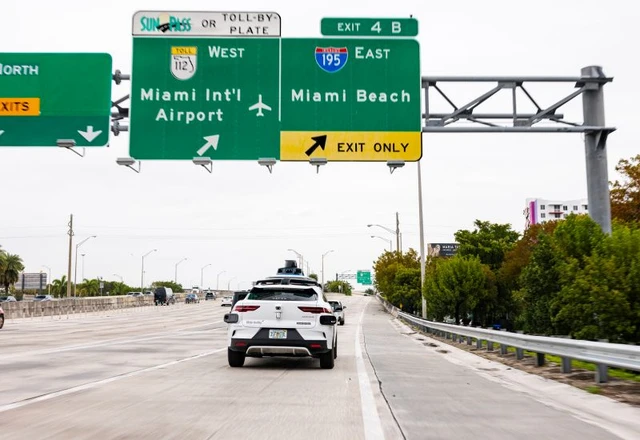
Waymo’s deployment strategy remains measured and methodical: in the initial phase, ride access will be restricted to company employees. This approach allows for the final fine-tuning of systems within the specific environmental nuances of each city before the service is opened to the general public. Currently, Waymo operates in more than ten U.S. cities, while its competitors are left playing catch-up. For instance, Zoox is only now preparing to enter the Austin and Miami markets, and Tesla's ambitions remain largely confined to Texas, despite plans to expand into Florida.
The technical bedrock of Waymo’s operation is an impressive fleet of approximately 4,000 prototypes equipped with fifth- and sixth-generation autopilot systems. Unlike many competitors who prioritize raw efficiency, Waymo’s engineers are striving to make the AI's driving behavior feel "more human." However, this pursuit has proven fraught with challenges; attempts to mimic human driving patterns have repeatedly drawn scrutiny from regulators, who demand absolute predictability and strict adherence to traffic laws.
Beyond the ethics of driving behavior, developers have had to grapple with so-called "edge cases"—rare but critical scenarios that are difficult to anticipate during neural network training. Specifically, Waymo's systems required specialized training to recognize flooded roadways and to interact correctly with dense crowds during large-scale urban events. These iterative learning cycles are transforming the robotaxi from a simple algorithm into an adaptive system capable of navigating the unpredictability of an urban environment.
One of the company's most formidable challenges lies ahead: entering the London market. Transitioning to left-hand traffic will require more than a simple configuration change; it will necessitate a fundamental adaptation of perception and decision-making algorithms. Nevertheless, Waymo has set ambitious targets, aiming to increase its volume to one million trips per week across all operational regions by the end of the year. Given that the system has already clocked over 20 million successfully completed passenger trips, this goal appears well within reach, shifting autonomous transport from a futuristic vision into a daily reality.
 The Global Triumph of Chinese Electric Mobility