The notion of "sunlight on demand" is evolving from a science fiction trope into a tangible engineering pursuit. The authorization of an experimental mirror satellite opens the door to a global orbital lighting infrastructure designed to illuminate the planet's nocturnal hemisphere. Yet, the developers' technological optimism is meeting stiff resistance from scientists and ecologists alike. At stake is more than just the clarity of astronomical observations; the fundamental biological rhythms of all living organisms are on the line.
The U.S. Federal Communications Commission (FCC) has greenlit an ambitious and controversial project by the California-based startup Reflect Orbital. The venture involves the launch of Eärendil-1, a demonstration craft that serves as the first step toward establishing a network of orbital reflectors. Named after the legendary mariner from Tolkien’s mythology, the satellite is designed for one specific purpose: redirecting sunlight to the dark side of the Earth.
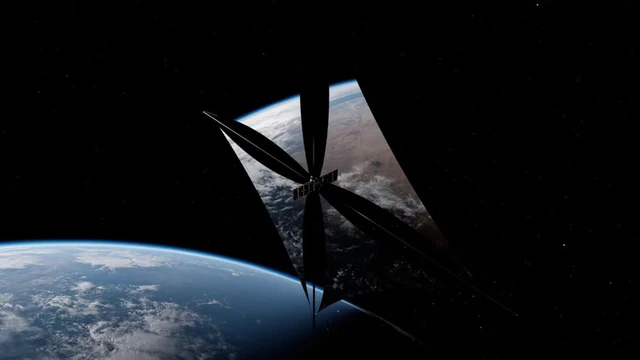
The technical architecture of the craft centers on the deployment of a massive square Mylar reflector. This thin-film structure, measuring 18 by 18 meters, creates a mirrored surface of 324 square meters. By maneuvering the entire chassis of the satellite, operators can concentrate the luminous flux onto a specific area of the surface, creating a spot approximately five kilometers in diameter. According to the developers' calculations, the illuminance in this zone will reach 0.1 lux—an intensity comparable to the light of a full moon. To ensure communication and command and control, the FCC has allocated several frequency bands spanning from 401 MHz to 8.5 GHz.
Beneath the apparent simplicity of the concept lies a sweeping commercial strategy. Reflect Orbital is positioning its technology as a "sunlight-on-demand" service. In the short term, such a capability could prove indispensable for search-and-rescue operations in disaster zones or for illuminating remote industrial sites. In a more long-term and ambitious vision, the company plans to use orbital mirrors to stimulate agricultural yields and, more critically, to extend the operational window of terrestrial solar power plants after sunset.
However, the company's ambitions extend far beyond a single experimental module. According to disclosed plans, two craft are slated for orbit by 2026, over a thousand by 2028, and by 2035, the constellation could swell to 50,000 reflectors. It is this sheer scale that is triggering serious alarm within the global community.
Astronomers and dark-sky advocacy organizations warn of catastrophic consequences. Modeling conducted by the European Southern Observatory indicates that for an observer located within the illuminated zone, the satellite would appear four times brighter than a full moon. Even when the beam is directed elsewhere, the craft will shine with the intensity of Venus. The deployment of a full constellation comprising tens of thousands of mirrors could increase the overall brightness of the night sky by three to four times, effectively neutralizing the possibility of many types of ground-based astronomical research.
Beyond the scientific impact, acute ecological concerns have emerged. Artificial nighttime illumination severely disrupts the circadian rhythms of plants, insects, and animals, potentially leading to unpredictable ecosystem failures. There is also the risk of blinding pilots and drivers, as well as a sharp increase in the probability of collisions in Low Earth Orbit (LEO) due to the massive influx of new objects.
The regulator's response, via the FCC, has been pointedly perfunctory. Despite thousands of protests, the commission stated that its jurisdiction is limited exclusively to the management of the radio frequency spectrum. Issues of ecology and social impact were delegated to the realm of "public interest," where the priority is deemed to be the encouragement of technological innovation.
In an attempt to mitigate criticism, Reflect Orbital has promised to implement a system of "exclusion zones" to avoid illuminating observatories and nature reserves. The company also claims it is ready to publish satellite trajectories and can promptly deactivate the illumination by simply rotating the mirror. In practice, however, the efficacy of these measures remains questionable. The maiden flight of Eärendil-1, scheduled for the end of this year, will be the first real-world test to determine whether "sunlight-on-demand" becomes a useful tool or evolves into a global source of light pollution.
 Starship's Return from the Indian Ocean