Global demand for high-performance memory, fueled by the meteoric rise of artificial intelligence, is transforming the semiconductor industry into a theater of intense strategic rivalry. South Korea is seeking to solidify its technological hegemony by establishing production clusters of unprecedented scale. At the epicenter of this movement is Samsung Electronics, which is radically overhauling its roadmaps and accelerating the deployment of new capacity. This is more than a mere expansion of fabrication plants; it is a high-stakes struggle for leadership in an era defined by the scarcity of next-generation components.
In the semiconductor industry, time is the ultimate currency. Any reduction in time-to-market can translate into a dominant market share or the ability to be first-to-market with advanced memory standards like HBM (High Bandwidth Memory)—components that are critical for the operation of modern GPUs and neural networks. Consequently, Samsung Electronics' decision to accelerate the commissioning of its Yongin facility is not merely a technical optimization; it is a calculated strategic maneuver.
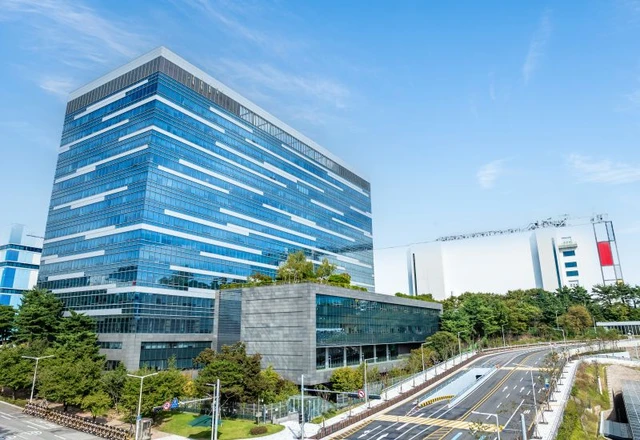
Located just 40 kilometers south of Seoul, the city of Yongin is becoming the epicenter of semiconductor expansion. While long associated primarily with SK hynix, the region is now seeing Samsung deploy its own large-scale production capabilities. According to updated plans, the facility will launch as early as 2029—at least a year ahead of the original 2030–2031 window. For Samsung, this site serves as the primary anchor in Yongin, streamlining logistics and enhancing synergy with other regional technological hubs.
The scale of this initiative transcends corporate ambition; it is a state-led project of colossal proportions, backed by the South Korean government. As part of the creation of a national semiconductor cluster, investments totaling hundreds of billions of dollars are planned. The objective is ambitious: to build an infrastructural foundation that enables local giants to double their memory output within the next five years. Beyond Yongin, this strategic expansion will extend to Gwangju, where a major complex is slated for ground-up construction.
However, market analysis suggests that even this pace may be insufficient. A profound disconnect exists between production capacity and global demand. Clients—including the world's leading cloud computing providers and AI accelerator developers—are calling for a five-to-sixfold increase in memory supplies.
The situation is further complicated by the fact that even with maximum resource mobilization, SK Group forecasts only a threefold increase in production capacity by 2034. This deficit creates a critical "bottleneck" for the entire global IT industry, where memory access has become the primary constraint on the pace of artificial intelligence development. In this context, any acceleration of Samsung's plant construction becomes vital to maintaining the global technological equilibrium.
 The Strategic Alliance of Nvidia and MediaTek