The modern wearables market is undergoing a fundamental transition, evolving from simple accessories into comprehensive instruments for health monitoring and survival. At the Galaxy Unpacked event in London, Samsung unveiled its latest smartwatch lineup, bifurcating its strategy into two distinct pillars: extreme endurance and everyday comfort. The spotlight fell on record-breaking display brightness and the deep integration of artificial intelligence into biometric data analysis. These devices are engineered to redefine how users interact with their physiological state in real time.
Samsung's strategy for its latest generation of wearables centers on precise audience segmentation. The flagship Galaxy Watch Ultra2 is engineered for those who operate or train in environments where conventional electronics typically fail. Its titanium chassis provides the necessary structural rigidity and environmental protection, making the device a viable tool for mountaineers, trail runners, and divers.
A pivotal technical leap is the AMOLED display, boasting a peak brightness of 5,000 nits—effectively solving the challenge of screen legibility under direct sunlight, even in the most intense lighting conditions. Under the hood, the device is powered by the Qualcomm Snapdragon Wear Elite platform, ensuring high responsiveness and superior power efficiency. Particular attention has been paid to positioning accuracy: dual-band GPS (L1+L5) minimizes drift when navigating dense urban canyons or thick forest canopies. To sustain autonomy, the watch features an 800 mAh battery, while 64 GB of onboard storage allows for extensive maps and media libraries without relying on a tethered smartphone.
The Ultra2's feature set extends far beyond that of a standard fitness tracker. The system is capable of analyzing terrain during off-road running and calculating optimal hydration protocols. For diving enthusiasts, specialized depth and water temperature sensors transform the watch into a fully functional dive instrument.
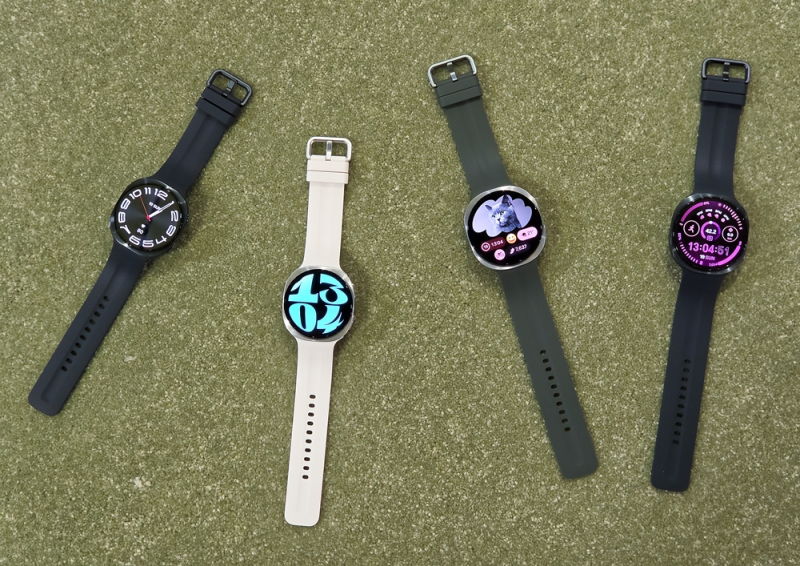
Running parallel to the extreme model is the Galaxy Watch9—a study in balance and aesthetic refinement. Available in 40mm and 44mm variants, this model targets users who prioritize health monitoring without excessive bulk or weight. Despite its more understated positioning, the watch also leverages the powerful Snapdragon Wear Elite processor and an AMOLED screen with brightness up to 3,000 nits, which remains among the highest benchmarks in the industry. Here, the primary focus is on 24/7 monitoring of sleep patterns, physical activity, and core vital signs.
The cognitive engine driving both models is the Samsung Health ecosystem, augmented by artificial intelligence algorithms. In this context, AI transcends marketing jargon to become a genuine diagnostic tool: the system can detect signs of sleep apnea, evaluate cardiovascular health, and offer personalized recovery recommendations following intense exertion. This evolves the device into a personal medical assistant that monitors daily cardiac load and overall physical conditioning.
On the software front, the devices run Google Wear OS 7 with Samsung’s proprietary One UI 9 Watch overlay, ensuring seamless integration with smartphones running Android 13 and above. The technical stack is rounded out by Bluetooth, Wi-Fi, and NFC support, along with LTE connectivity for complete independence from a mobile phone.
From a strategic market perspective, Samsung has clearly delineated the pricing tiers: the Ultra2 occupies the premium segment for professionals and enthusiasts, while the Galaxy Watch9 serves as an accessible gateway into the high-tech wearables ecosystem without compromising on performance.

 Energy Autonomy: The Extreme Edition