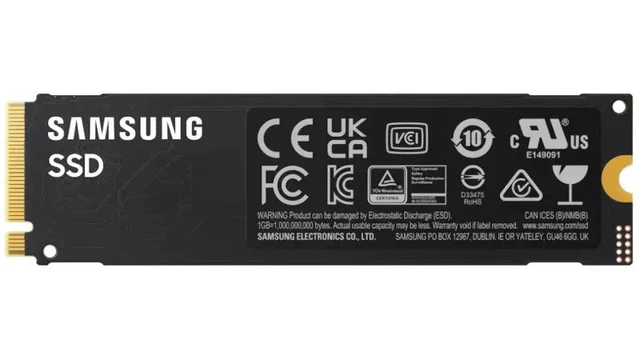
The contemporary high-speed storage market is pivoting away from a raw pursuit of peak benchmarks toward a more nuanced focus on cost-to-performance optimization. Leveraging its dominance in NAND flash production, Samsung continues to meticulously segment its product portfolio to address a diverse spectrum of user needs. The introduction of the Samsung 990 signals a strategic shift toward the "democratization" of high-end performance. By pairing the capabilities of the PCIe 4.0 interface with cost-efficient engineering, Samsung aims to redefine the benchmarks for the entry-level NVMe segment.
The solid-state drive market has long been polarized between uncompromising flagships and budget-friendly alternatives, yet the line between them is increasingly blurring. The new Samsung 990, recently spotted on the Canadian regional site of the manufacturer, represents a strategic attempt to deliver premium-tier speeds without the premium price tag associated with the EVO or PRO series. This device is tailored for users who demand the maximum bandwidth of PCIe 4.0 but are unwilling to pay a surcharge for professional-grade endurance.
The defining architectural shift in the Samsung 990 is the move away from a dedicated DRAM cache in favor of Host Memory Buffer (HMB) technology. Unlike traditional flagship SSDs, which feature a soldered memory chip to store mapping tables, HMB allows the drive to leverage a small portion of the system's own RAM. This approach significantly reduces both manufacturing costs and power consumption, while in real-world user scenarios, the difference in data access latency remains virtually imperceptible.
The device's technical foundation remains a benchmark for the Korean giant, leveraging in-house 3D V-NAND chips and a proprietary controller. This vertical integration allows Samsung to achieve a high degree of synergy between the hardware and firmware. The 1TB version boasts impressive figures, with sequential read speeds reaching 7,150 MB/s and write speeds hitting 6,450 MB/s. The higher-capacity 2TB model demonstrates even greater efficiency, pushing the read ceiling to 7,250 MB/s.
The random access metrics for the 2TB variant are particularly noteworthy, boasting read speeds of up to 850,000 and write speeds of up to 1.2 million IOPS. Such performance makes the drive an ideal solution for modern gaming rigs and workstations, where the speed of small-file loading and overall OS responsiveness are critical.
However, achieving high-end speeds within a budget-conscious framework necessitates a compromise in endurance. The Terabytes Written (TBW) ratings are noticeably more modest than those of the PRO series: 400 TB for the entry-level model and 800 TB for the larger capacity. A three-year warranty further confirms the device's positioning as an "entry-level" offering within the NVMe lineup. Nevertheless, for the vast majority of home users and gamers, this level of durability remains more than sufficient for the entire lifecycle of the system.
The Samsung 990 occupies a critical niche, delivering performance that was considered exclusive just a few years ago in a more accessible package. It is more than just another SSD; it is an exercise in optimization, proving that achieving ultra-high speeds no longer requires the most expensive components on the market.
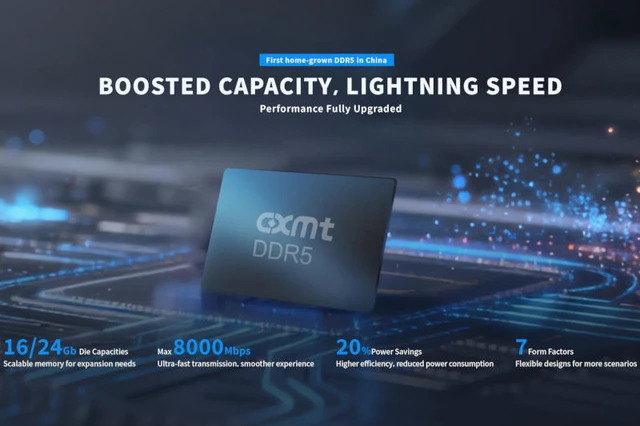 The Price of Acceleration: CXMT’s Rapid Push into Memory