The pursuit of flawless color accuracy in today's flagship devices frequently reveals a precarious tension between material science and control algorithms. Recent reports of a pervasive red tint affecting Galaxy S26 Ultra displays have sparked significant concern over the integrity and quality control of the latest generation of OLED panels. This issue—manifesting as chromatic shifts or, in more severe cases, distinct pink blotches—has cast doubt on the fundamental hardware reliability of the device. Samsung’s response, however, attempts to shift the narrative away from manufacturing defects, framing the problem instead as a matter of software calibration and optimization.
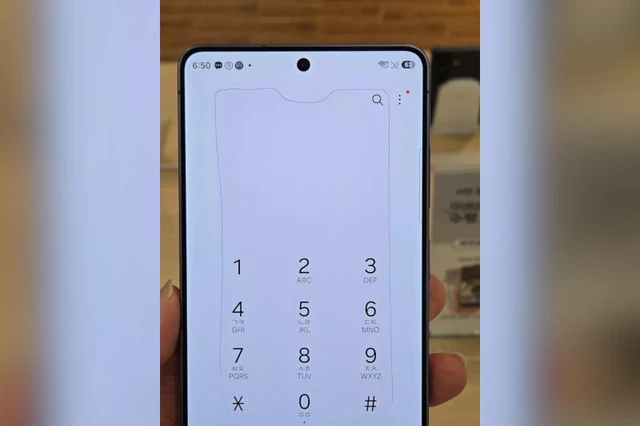
Issues with the visual rendering on Galaxy S26 Ultra displays became apparent almost immediately after the device hit the market. Users began reporting a distinct reddish or pinkish hue, which in some instances appeared spontaneously, while in others developed gradually. The most critical manifestations of the defect included pronounced pink rectangles appearing in the center of the screen, creating the impression of a significant hardware failure or organic LED degradation.
Of particular interest is the fact that this anomaly was frequently observed on retail floor models. This suggests a direct causal link between operating conditions and the onset of the visual defect. Within the OLED industry, it is well-understood that prolonged operation at maximum brightness under intense ambient lighting places excessive stress on subpixels, which can lead to a shift in color balance. The manufacturer has confirmed this scenario, noting that specific usage patterns trigger a deviation in the screen's color temperature.
From a technical standpoint, the situation is complicated by the increasingly porous boundary between hardware defects and software inaccuracies in modern panels. Samsung maintains that the physical integrity of the displays remains intact and that the issue lies solely in the improper distribution of the color balance. This implies that while the matrix itself is functioning normally, the color management algorithms are failing to ensure image uniformity across the entire surface of the screen.
The proposed remedy is software-based calibration. Rather than resorting to costly and logistically demanding hardware swaps, the company plans to deploy a firmware update to adjust color regulation values. This approach is not unprecedented; Samsung has long utilized dynamic calibration technologies to compensate for the natural aging of OLED materials and maintain color accuracy throughout the device's lifecycle. The update is intended to recalibrate image output parameters to neutralize the reddish tint and restore the display to its reference neutrality.
While the exact rollout schedule for the patch remains opaque, the mere acknowledgment of the problem and the proposal of a software fix eliminate the need for large-scale hardware recalls. This underscores a prevailing trend in the electronics industry where software increasingly acts as a corrective layer for minor hardware imperfections, allowing physical parameters to be tuned on the fly.
 The Foldable iPhone: A New Chapter for Apple