Global internet infrastructure frequently falls victim to political maneuvering and administrative lapses. When US financial regulators levy sanctions, the technical execution of these mandates can trigger unforeseen, wide-scale disruptions. The incident involving the t.me domain serves as a stark reminder of the fragility inherent in the governance of national TLDs. A simple misinterpretation of requirements resulted in a brief but significant paralysis of one of the world's most ubiquitous URL shortening systems.
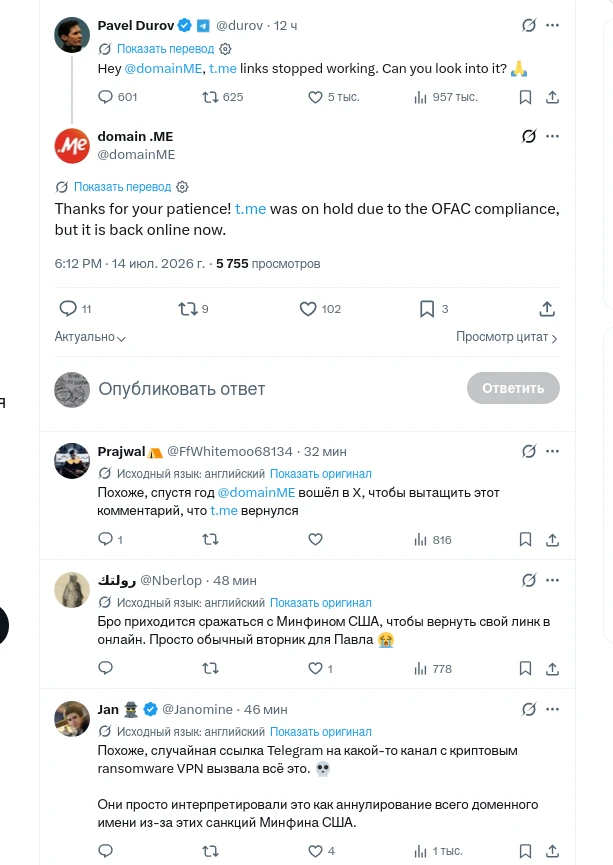
The saga surrounding the blocking of the t.me domain serves as a stark illustration of how administrative pressure can trigger technical collapse. Domain.ME, the registry managing Montenegro's national .me domain, effectively admitted that the service disruption was driven by mandates from the Office of Foreign Assets Control (OFAC) under the U.S. Department of the Treasury. As a result of this intervention, one of the primary gateways into the Telegram ecosystem became temporarily inaccessible to users worldwide.
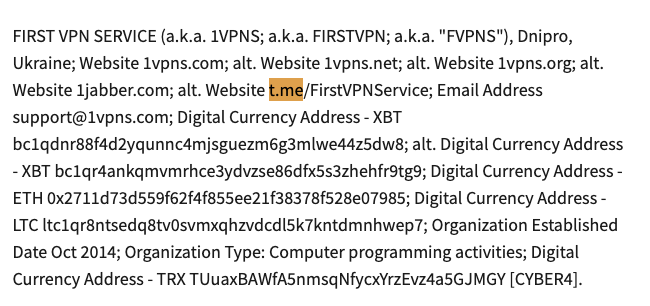
The catalyst for the incident was an OFAC ruling dated July 13, 2026, which prohibited the activities of a specific provider of network circumvention services. The sanctions list identified a particular Telegram channel belonging to this provider, formally designated as "website http://t.me/***". However, a critical technical failure occurred during the execution of this mandate: instead of surgically blocking the specific URL path leading to that single channel, the registrar erroneously restricted access to the entire root ccTLD.
This blunder is a classic case of "overblocking"—a scenario where a lack of granular filtering tools or administrative oversight results in collateral damage to an entire resource. In this instance, technical incompetence meant that millions of users lost access to the messenger's short links, despite the sanctions targeting only a narrow segment of content.
The situation only began to resolve following the direct intervention of Pavel Durov and widespread public outcry. Within a few hours, the .me registry restored the functionality of t.me, acknowledging the need to correct its actions. This episode underscores the vulnerability of even global services to national domain governance and the profound influence of U.S. financial regulators over the technical architecture of the internet.
Notably, the Telegram team demonstrated a high level of resilience against such infrastructural risks. During the incident, the messenger swiftly pivoted its applications to utilize an alternative domain, telegram.me. This redundancy strategy minimized disruption and ensured service continuity while the primary gateway remained blocked.
 The Power Shift at Apple