The stability of global network infrastructure frequently hinges on the seamless operation of critical bottlenecks within naming systems. A sudden failure in one of the most recognizable short domains can trigger a systemic disruption, severing the connection between millions of users and their content. The recent incident involving the t.me domain serves as a stark reminder that even the most dominant services remain vulnerable to the administrative levers of domain registries. As access is restored, the familiar dynamics of interaction within the messenger's ecosystem are returning to normal.
The technical outage restricting access to the t.me domain has been resolved following the restoration of the corresponding DNS records on the .me zone registry's primary server. From a technical standpoint, this restores the ability to map human-readable URLs back to specific server IP addresses. However, full recovery for end users is not instantaneous. Due to caching mechanisms employed by ISPs and public DNS providers worldwide, data propagation can take up to 24 hours as the Time to Live (TTL) of legacy records expires across local nodes.
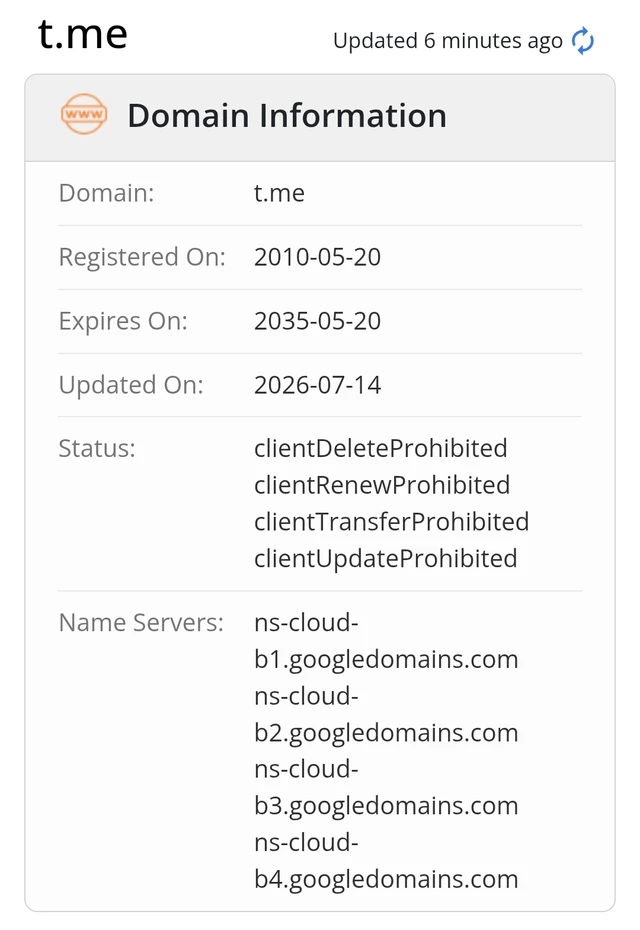
The critical point of failure was identified as a change in the domain's status to serverHold within the WHOIS system. Under the regulations of ICANN—the international body coordinating the allocation of names and IP addresses—this status is one of the most stringent administrative tools available. When a registry operator implements serverHold, the domain is effectively excised from the DNS system, rendering it unreachable for all queries regardless of the owner's or registrar's configurations. In essence, the resource becomes a "digital void" within the global naming hierarchy.
As an immediate mitigation measure to minimize disruption, the Telegram team was forced to temporarily pivot internal application mechanisms to an alternative domain: telegram.me. This redundancy strategy ensures service continuity even when a primary gateway is compromised, facilitating a seamless transition for users accessing channels and profiles.
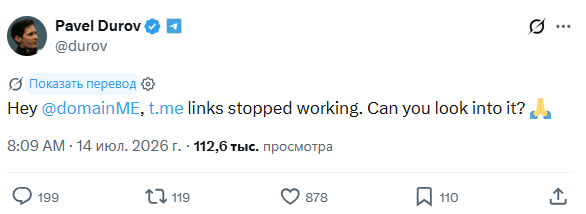
The incident gained significant public visibility when Telegram founder Pavel Durov took to X to demand a detailed explanation from the registrar regarding the cause of the outage. This event underscores the critical need for transparency among national zone administrators, as technical manipulations at the registry level can have an immediate and devastating impact on global digital products.
 The Power Shift at Apple