The mid-range smartphone market is undergoing a fundamental transformation, with priorities pivoting toward extreme battery endurance and immersive visual scale. Xiaomi is answering this demand by reimagining the core philosophy of its most successful product line. The new Redmi Note 17 and Redmi Note 17 5G are evolving beyond mere "balanced" devices, transforming into genuine powerhouses for the mainstream consumer. This move signals a new era in the evolution of accessible technology.
Today's consumers are increasingly caught in a classic trade-off: the choice between a compact, ergonomic gadget and a device capable of sustaining several days of intensive use without a power outlet. In the latest iteration of the Redmi Note series, Xiaomi is betting on uncompromising stamina and sheer scale, offering devices that effectively erase the boundary between a smartphone and a compact tablet.
The centerpiece of these updates is the display. Both models feature stunning 6.99-inch AMOLED panels. A resolution of 2396 × 1080 pixels, paired with a 120Hz refresh rate, ensures a fluid interface, while a peak brightness of 1800 nits guarantees legibility even under direct sunlight. To protect such an expansive glass surface, Xiaomi has employed Gorilla Glass 7i—a critical addition for devices of this magnitude.
However, the real engineering triumph lies beneath the chassis. Engineers have implemented silicon-carbon batteries with a massive 7700 mAh capacity. The shift to silicon-carbon technology significantly increases energy density compared to traditional graphite anodes, allowing for a colossal charge without a corresponding increase in bulk. The system is supported by 45W fast charging, while a 22.5W reverse charging feature transforms the smartphone into a fully functional power bank for other peripherals.
The bifurcation of the lineup into 4G and 5G versions is driven by diverging performance strategies. The base Redmi Note 17 is powered by a 6nm Snapdragon 6s Gen 2 processor with clock speeds up to 2.9 GHz. This is a dependable workhorse for everyday tasks, albeit limited in data transmission speeds. Conversely, the 5G version relies on the more advanced 4nm Snapdragon 4 Gen 4 chip. Despite a lower clock speed (up to 2.3 GHz), the 4nm process delivers superior energy efficiency and 5G connectivity, making the device a more future-proof investment.
Naturally, the pursuit of maximum autonomy and screen real estate has expanded the device's physical footprint. Weighing in at 225 grams, the new models are appreciably heavier than their predecessors—a difference of 40 to 50 grams. This is a calculated trade-off: ergonomics have been deprioritized in favor of functionality and runtime.
In other respects, the devices follow a steady, tried-and-true philosophy. A 50MP main camera with an f/1.8 aperture and a 16MP selfie module provide a competent baseline for mobile photography. IP65-rated protection ensures resilience against dust and splashes, while the software experience is driven by the current HyperOS 3. Particularly noteworthy is the support policy: a promise of six years of security updates transforms these budget-friendly devices into a sustainable long-term investment.
Pricing remains accessible. The Redmi Note 17 is available in five memory configurations (ranging from 4/128 GB to 8/256 GB) starting at $250. The 5G version is offered in three memory variants starting at $300. Both devices retain microSD card support, which, in an era of disappearing expansion slots, serves as a pragmatic nod to the power user.
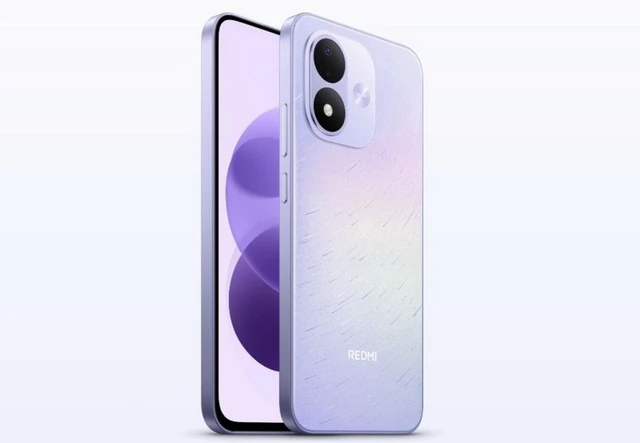
The aesthetic palette—Celestial Purple, Sky Teal, and classic Black—rounds out the profile of devices that strive to be simultaneously high-tech and attainable.
 iPhone 17: Dominating the Global Market