For years, the "air gap" concept has been hailed as the gold standard for securing mission-critical systems. Yet, physical isolation is proving to be far more precarious than experts once believed. New research reveals that standard video cables can be weaponized as covert radio transmitters to exfiltrate sensitive data. Dubbed "TrojPix," this method transforms conventional display interfaces into an invisible communication channel, effectively bypassing traditional network security measures.
Within the realm of cybersecurity, there exists a specialized category of threats known as TEMPEST. This discipline examines the potential for data interception via the electromagnetic emissions inevitably leaked by any operating electronic device. For years, such techniques were considered the exclusive domain of state intelligence agencies, requiring prohibitively expensive and complex equipment. However, a new technology called TrojPix is shifting this paradigm, bringing these sophisticated attacks into the realm of practical applicability.
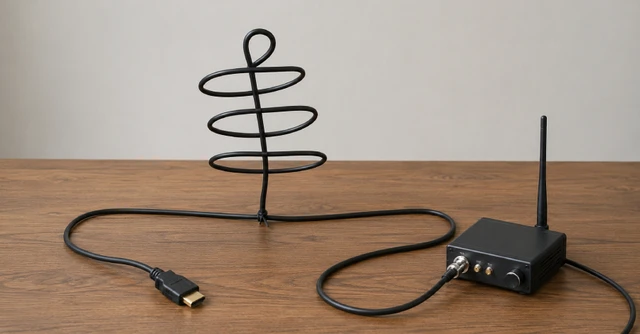
The core of the method lies in repurposing video cables—HDMI, DisplayPort, and even legacy VGA—as improvised antennas. Researchers discovered that by manipulating the video signal, they could force the cable to emit radio waves at specific frequencies. In this scenario, a PC's video output ceases to be a mere display interface and is transformed into a fully functional radio transmitter, the signal of which can be intercepted and decoded by an external receiver.
The technical breakthrough of TrojPix is its unprecedented data transfer speed. In laboratory settings, operating at a frequency of approximately 20 MHz, researchers achieved a throughput of 8.1 Mbps. To put this in perspective: a 10 MB file can be transmitted in just 41.6 seconds, while 100 MB is exfiltrated in under two minutes. This represents a 27-fold increase in speed compared to previous experiments in air-gap data extraction, rendering the attack a formidable threat for corporate espionage.
The efficacy of the method extends beyond mere speed. In open-air environments, signals were successfully intercepted at distances of up to 208 meters. Even physical barriers, such as concrete walls, proved to be negligible obstacles; at a distance of 10 meters, the data decoding accuracy remained at 99%. Testing across nine monitor brands and fifteen different cable types confirmed the universality of the approach—the attack remains effective regardless of the specific hardware or system configuration.
Stealth was a primary focus for the developers. TrojPix operates in two distinct modes. In the first, the software simulates a powered-off monitor while data transmission continues silently in the background. In the second, the malicious code embeds signals directly into the active visual content of the desktop. During tests involving 50 participants, not a single user detected any visual artifacts or image distortions, making the attack virtually invisible to the human eye.
A particularly concerning aspect is that standard cable shielding, designed to mitigate interference, is incapable of fully blocking the leak. While it slightly reduces efficiency, the success rate remains remarkably high—approximately 91%.
Countering such threats requires radical measures. The most effective solution is a transition to fiber-optic video connections, as photons, unlike electrons, do not generate electromagnetic radiation. Alternative defenses include the construction of comprehensive Faraday cages to shield entire rooms, the implementation of software-based pixel smoothing, or the introduction of algorithms that randomize the order of video signal transmission, thereby making the decoding of the intercepted radio stream impossible.
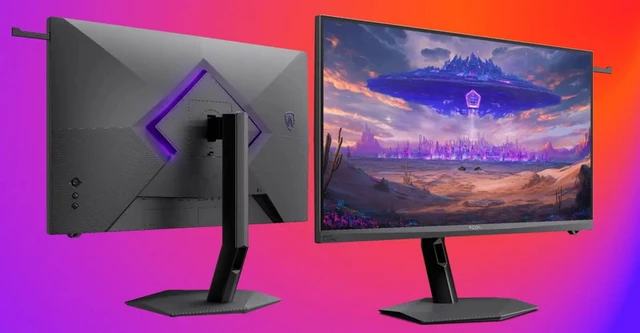 The Pinnacle of Clarity: AOC's New 5K Monitor