The era of cloud hegemony in artificial intelligence is encountering a pivotal challenge: the growing demand for total autonomy and data privacy. Developers are increasingly seeking ways to migrate compute-intensive workloads from remote servers directly onto local workstations. Microsoft’s response to this shift has materialized as Project Zenith—a specialized Windows configuration tailored for high-performance systems. This move signals a strategic pivot from a general-purpose operating system toward a highly specialized toolkit designed specifically for AI development.
Modern software development, particularly within the realm of generative AI, demands more from an operating system than mere stability; it requires absolute transparency and the total elimination of "digital noise." Standard versions of Windows, bloated with consumer-grade services and incessant notifications, often act as a bottleneck for professionals. Project Zenith is designed to bridge this divide, offering an environment where every interface element and system parameter is precision-tuned for engineering workflows.
The core thesis of the project is the enablement of local Large Language Model (LLM) deployment. The industry has long been tethered to cloud-based APIs, resulting in token limitations, network latency, and persistent data security concerns. Project Zenith disrupts this paradigm, allowing models with over 30 billion parameters to be deployed directly on the user's device. To facilitate this, Microsoft has established rigorous hardware benchmarks: a minimum of 64 GB of unified memory with a bandwidth of at least 250 GB/s. Such a configuration transforms a workstation into a full-fledged computational node, rivaling the efficiency of entry-level server solutions.
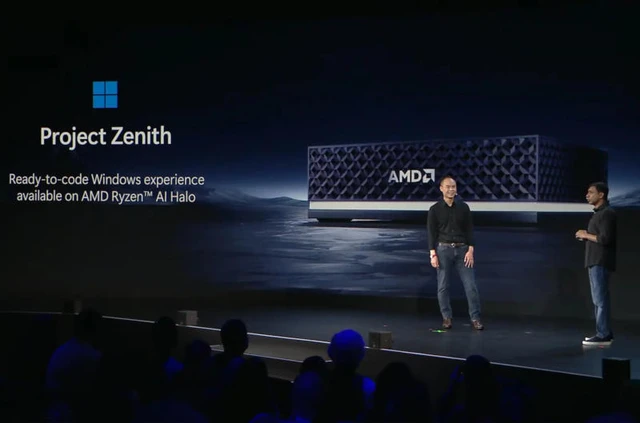
The first tangible manifestation of this concept was a miniature PC powered by the Ryzen AI Halo processor, unveiled at IFA 2026. By leveraging an architecture with an integrated Neural Processing Unit (NPU), the system efficiently distributes workloads between the CPU and GPU, ensuring high compute density within a compact form factor. However, Project Zenith is not tethered to a single platform; similar systems based on other chipsets are expected in the near future, underscoring Microsoft's ambition to establish a universal "AI Station" standard.
On the software front, Project Zenith represents a fundamental overhaul of the user experience. Rather than forcing developers to spend hours manually tuning the system, Microsoft provides a curated, pre-installed toolchain: Visual Studio Code, GitHub Copilot, PowerToys, and WinAppCLI. Yet, the true value lies in the granular system optimizations.
In this iteration of Windows, file system management and the UI have been completely reimagined. By default, File Explorer displays file extensions and hidden objects, while the title bar consistently shows the full directory path—a critical requirement when navigating deeply nested repository hierarchies. Furthermore, long path support is enabled by default, removing legacy Windows constraints on path string length.
Simultaneously, all superfluous distractions have been purged from the system: account notifications, Start menu suggestions, and "recent files" histories are gone. The PowerToys command palette is integrated into the workflow by default, transforming OS management into a swift, almost invisible process.
This approach signals a philosophical evolution for Microsoft. The operating system is ceasing to be a mere application wrapper and is instead becoming an active development tool. Project Zenith is an acknowledgment that for the professional community, environmental purity and system predictability are far more valuable than marketing features and visual flourishes. It is a decisive step toward creating a truly professional OS—one that does not obstruct the creative process, but provides its technical bedrock.
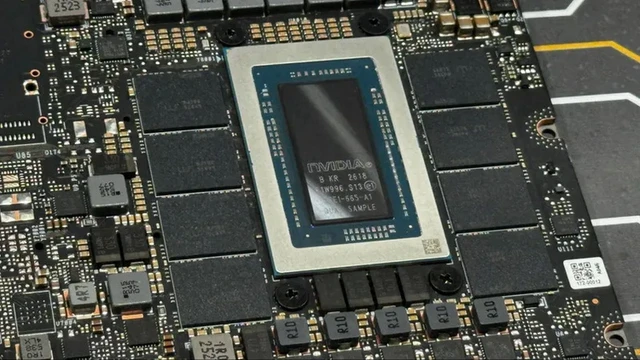 Nvidia N1X and the New Era of Arm PCs