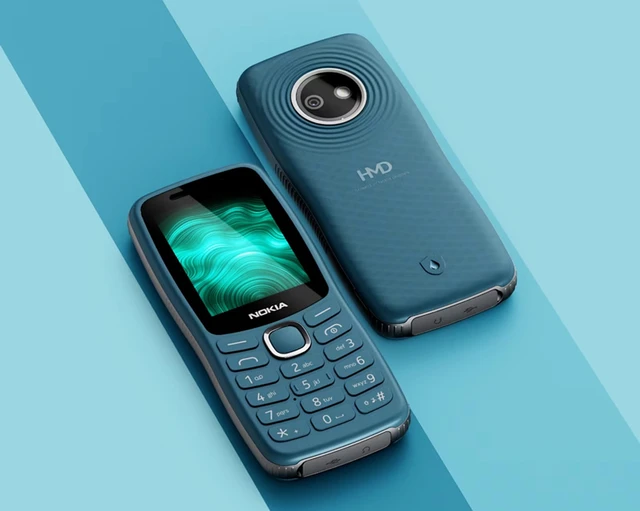
In an era of digital saturation and the inherent fragility of modern flagships, the market is pivoting back toward utilitarian hardware. HMD Global is doubling down on radical functionalism with the introduction of the Nokia 123 Shield—a device engineered for those who prioritize battery longevity and physical resilience over raw data throughput. At its core, the device’s philosophy is one of stripping away excess in pursuit of absolute stability.
The contemporary mobile landscape is witnessing a curious paradox: amidst the ascent of generative AI and foldable displays, there is a resurgent demand for so-called "dumbphones." The Nokia 123 Shield emerges as the embodiment of this philosophy, offering users a stripped-back interface and ruggedized durability. Its primary selling point is the IP65 certification, ensuring protection against dust, sand, and rain. While not fully waterproof, the device is engineered for hostile environments where a conventional smartphone would likely succumb to its first significant drop or moisture ingress.
Of particular interest is the calculated engineering trade-off implemented by HMD Global. The device completely eschews LTE and 5G support, a move that significantly drives down the retail price and optimizes power consumption. Rather than chasing data speeds, the focus has shifted toward the quality of fundamental connectivity; an updated antenna ensures more stable signal reception compared to its predecessor, the Nokia 105—a critical advantage for operations in remote regions or areas with marginal coverage.
The hardware specifications underscore the device's ascetic nature. Processing is handled by the Unisoc SC6531E chipset, paired with a modest 4 MB of both RAM and internal storage. While meager by modern standards, this capacity is sufficient for core tasks such as telephony and contact management. The visual interface consists of a 2.4-inch display with a resolution of 320 × 240 pixels; it makes no claim to high fidelity but remains legible under various lighting conditions.
The battery endurance of the Nokia 123 Shield effectively transforms it into a survival tool. A 1,750 mAh battery provides up to 19 days of standby time and nearly 28 hours of continuous talk time. Notably, even within this budget segment, the manufacturer has integrated a modern USB-C port for charging, streamlining cable management and improving connection reliability.
Additional utility is centered around basic user needs. The rear panel features an LED flashlight with three times the brightness of the Nokia 110, turning the phone into a viable light source. For those utilizing the device as a media player, a microSD slot supporting cards up to 32 GB and a classic 3.5mm audio jack are included, eliminating the need for Bluetooth peripherals.
From an ergonomic standpoint, the device remains remarkably compact: at 15 mm thick and weighing just 108 grams, it is virtually imperceptible in a pocket. HMD Global’s economic strategy aims for maximum market penetration, and preliminary retail data suggests an extremely accessible price point—approximately €36. This positions the Nokia 123 Shield as one of the most affordable and dependable communication tools available on the modern market.
 Energy Autonomy: The Extreme Edition