The contemporary mobile landscape is gradually pivoting away from the relentless pursuit of raw performance, shifting its focus toward genuine endurance and longevity. While most manufacturers obsess over shaving milliseconds off response times, Poco is doubling down on a fundamental solution to "battery anxiety." The new Poco X8 embodies this philosophy, pairing an extreme battery capacity with enhanced structural resilience. It is a device that redefines the concept of a dependable tool for the demands of daily life.
The visual experience of the Poco X8 centers on a massive 6.83-inch 1.5K AMOLED display. The choice of this specific resolution is a strategic trade-off, maintaining high image clarity without placing an undue burden on the GPU. Of particular note is the integration of the innovative M11 luminescent material, which pushes brightness to a new echelon: a peak value of 3,500 nits ensures flawless legibility even under the glare of the midday sun.
The display's technical stack is further enhanced by 12-bit color depth and full DCI-P3 coverage, making the device well-suited for content consumption and creation. For gamers, an adaptive touch sampling rate is provided, reaching an impressive 3,200 Hz in Game Turbo mode to ensure virtually instantaneous response times. Simultaneously, the developers have prioritized user wellness; a combination of 3,840 Hz PWM dimming and DC dimming technology virtually eliminates flicker, a claim validated by TÜV Rheinland certifications. Protection is implemented to industry standards via Gorilla Glass Victus 2.
Under the hood, the device is powered by the Snapdragon 6s Gen 4 chipset, built on a modern 4nm process node. A clock speed of up to 2.4 GHz ensures seamless multitasking, while up to 12GB of LPDDR4X RAM allows dozens of applications to remain active in the background. A critical detail lies in the storage configuration: the 256GB versions utilize the fast UFS 3.1 standard, whereas the base 128GB models employ UFS 2.2, which may noticeably impact data read and write speeds.
The photographic capabilities of the Poco X8 remain pragmatic. A 50MP primary module with Optical Image Stabilization (OIS) handles image sharpness, while a secondary 2MP depth sensor assists with portraiture. A 16MP front-facing camera covers basic needs for video calls and selfies. Both modules are limited to 1080p video recording at 30 frames per second, underscoring the device's positioning as a productivity tool rather than a professional cinematography instrument.
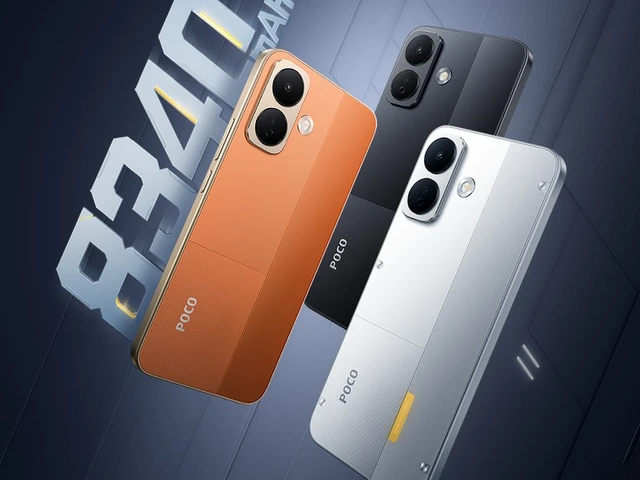
The model's primary technological triumph is its 8,340 mAh battery. This achievement is rooted in the use of a silicon-carbon anode, which significantly increases energy density without a proportional increase in the battery's physical dimensions. The 67W HyperCharge system minimizes downtime, while a 22.5W reverse charging function transforms the smartphone into a fully functional power bank for other gadgets. The cell longevity is especially noteworthy: even after 1,600 charge cycles, the battery retains at least 80% of its original capacity, effectively guaranteeing several years of operation without significant autonomy degradation.
The device's durability transcends conventional consumer standards. The Poco X8 is certified under IP66, IP68, IP69, and IP69K protocols. The latter standard implies resistance to high-pressure hot water jets, a feature typically reserved for specialized industrial equipment. Combined with a reinforced chassis, this makes the smartphone exceptionally resilient in harsh environments.
The software layer consists of Android 16 with the Xiaomi HyperOS 3 skin, optimized for power management and hardware synergy. Rounding out the package are stereo speakers with Dolby Atmos and Hi-Res support, capable of boosting volume up to 300%, effectively turning the device into a portable media center. Visually, the smartphone is available in three colors—black, white, and orange—featuring a refreshed back panel design divided into two functional zones.
 Qualcomm’s New Standard for Mobile Performance