Modern operating systems have evolved into intricate ecosystems of interdependent services, where even a minor glitch in a third-party application can trigger widespread visual instability. Recent reports from Windows 10 and 11 users have highlighted a peculiar anomaly: the emergence of blank white windows that obstruct portions of the desktop environment. The spotlight has fallen on Google Chrome, whose background processes appear to be clashing with Microsoft's graphical user interface (GUI). This incident once again underscores the precarious nature of system stability when it relies heavily on third-party APIs and auxiliary services.
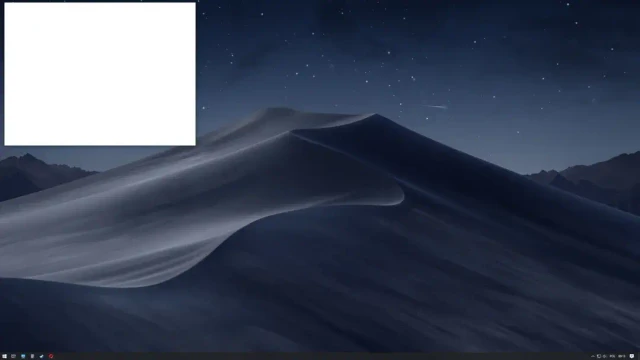
Users of the latest Windows iterations have been plagued by a disruptive visual artifact: empty white windows that suddenly materialize on the desktop, obscuring parts of the interface before vanishing into thin air. The issue is widespread, affecting users across stable releases of Windows 10 and 11, as well as Windows Insiders (specifically build 26300.8687 of version 25H2). Initial attempts to isolate the cause pointed toward conflicts with AMD GPU drivers; however, it soon became evident that these glitches persisted on Intel-based configurations. This effectively ruled out hardware failure, shifting the focus entirely toward software.
Further analysis revealed that the root cause is Google Chrome—specifically, a peculiar background mechanism embedded within the system's Task Scheduler. The issue stems from the RunPlatformExperienceHelperOnUnlock service located in the GoogleUserPEH folder. Designed as a bridge between the browser and external environment elements—such as extensions, plugins, and update modules—this "interaction helper" is intended to ensure seamless process execution upon system unlock. In its current implementation, however, it triggers a graphical failure, spawning these "phantom" windows.
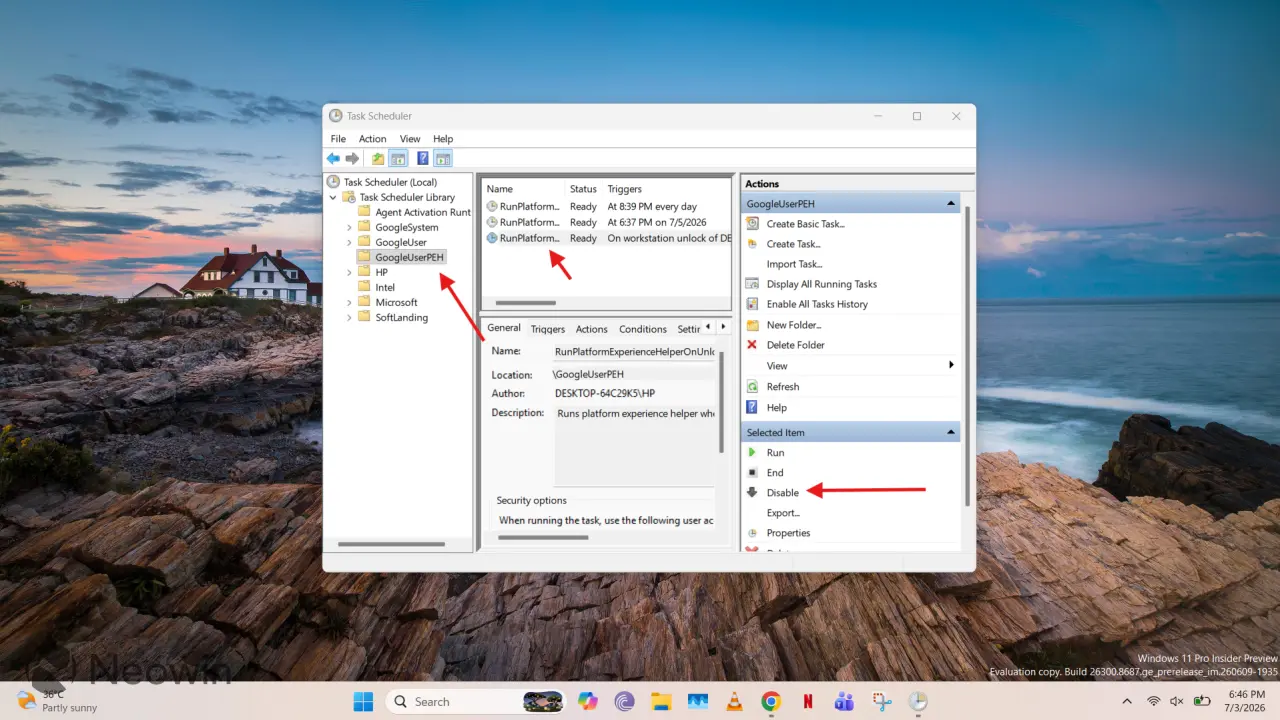
Resolving the issue requires manual intervention in the system settings. The solution involves disabling the corresponding task via the Windows Task Scheduler. By locating the GoogleUserPEH branch and disabling the RunPlatformExperienceHelperOnUnlock service, users can effectively terminate the component's activity and restore the interface to its intended cleanliness.
This incident is not an isolated case but rather part of a series of strange frictions between Google and Microsoft products. Previously, users noted a failure in GIF animations within the Windows emoji panel. It later emerged that the cause was not a bug within the OS code itself, but an external dependency: Google had ceased support for the Tenor API. Consequently, Redmond was forced to urgently overhaul its infrastructure and migrate to GIPHY to restore functionality to the standard Windows toolkit.
Such incidents highlight the inherent fragility of modern interfaces, which often rely on external descriptors and remote services. Even fundamental errors—such as the perennial "file is open in another program" warning—are rooted in deep-seated filesystem management mechanisms. When Windows blocks the deletion or renaming of an object due to an active file handle, it is simply stating a fact: the resource is locked by another process. In the case of Google Chrome, we are seeing a similar phenomenon, albeit at the level of visual representation: a background process "seizes" a portion of the screen, creating a void window that serves no functional purpose but severely degrades the user experience.
 The Price of Acceleration: CXMT’s Rapid Push into Memory