In an era of exponential data growth, traditional integrity verification methods are becoming increasingly inadequate. When file metadata ceases to be a reliable indicator of change, deep content analysis via cryptographic hashing becomes paramount. Precizer offers an elegant solution to this challenge, blending the lean efficiency of command-line utilities with the robust power of relational databases. With the release of version 0.16.0, the project expands its horizons, bringing professional-grade data verification to Windows users.
Ensuring data integrity across distributed systems or during large-scale backup operations often hits a wall due to the limitations of standard synchronization tools. Relying on simple file size and modification date comparisons can be deceptive; content may be corrupted or altered while metadata remains untouched. This is where Precizer proves its efficacy, offering deep verification through SHA512 checksum calculations.
The tool operates on an indexing principle: it traverses the directory tree and stores hashing results in an SQLite database. This approach transforms the verification process from a linear scan into a structured analysis. By maintaining databases for different sources, an administrator can instantaneously identify missing objects, redundant files, or elements whose content has diverged despite having identical names.
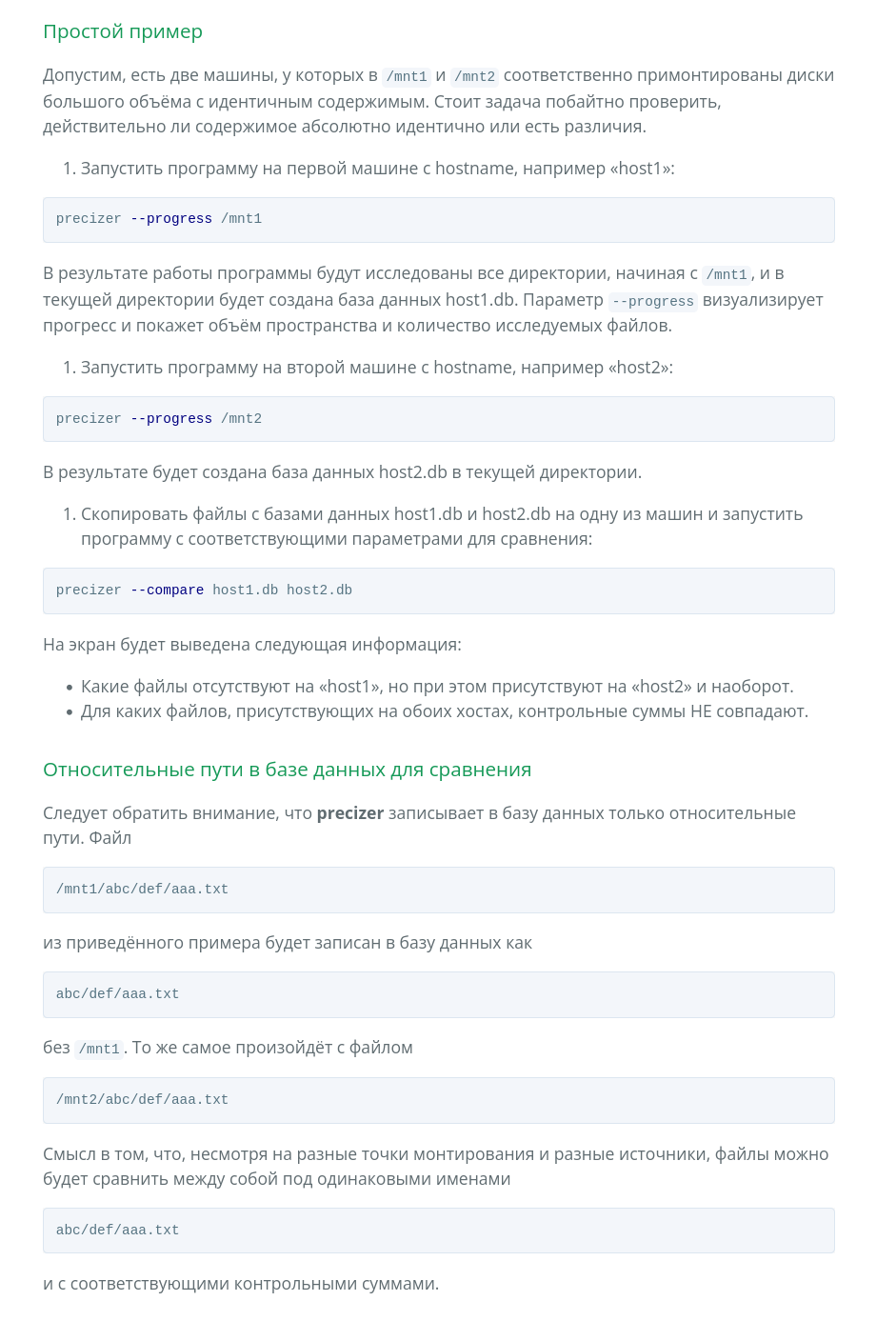
Precizer delivers particular value when handling datasets measured in terabytes and petabytes. At this scale, processing time becomes the critical bottleneck. If a scanning process is interrupted by a system crash or power failure, most utilities require a full restart from scratch—a task that is practically impossible with massive storage arrays. Precizer solves this through state persistence between sessions, allowing operations to resume exactly where they left off.
Beyond synchronization and Disaster Recovery, the tool can be integrated into a security perimeter. It enables the detection of unauthorized changes to system files or archives—modifications that may have been made by malicious actors who intentionally preserved original timestamps to evade detection.
Operational flexibility is provided via specialized execution modes. The -update mode allows for the incremental updating of an existing database, adding new objects and removing records of deleted files without requiring a full rescan of the entire array. For granular control over the analysis scope, -ignore and -include filters are available, allowing users to exclude temporary folders or focus exclusively on critical directories.
The project's tech stack underscores a commitment to maximum performance: the utility is written in C and distributed under the GPLv3 license. For a long time, the project focused on Unix-like systems, providing statically linked ELF binaries for Linux that operate independently of the specific distribution. For developers, Docker environments are provided, covering a wide spectrum of systems—from Alpine and Debian to Gentoo and Rocky Linux.
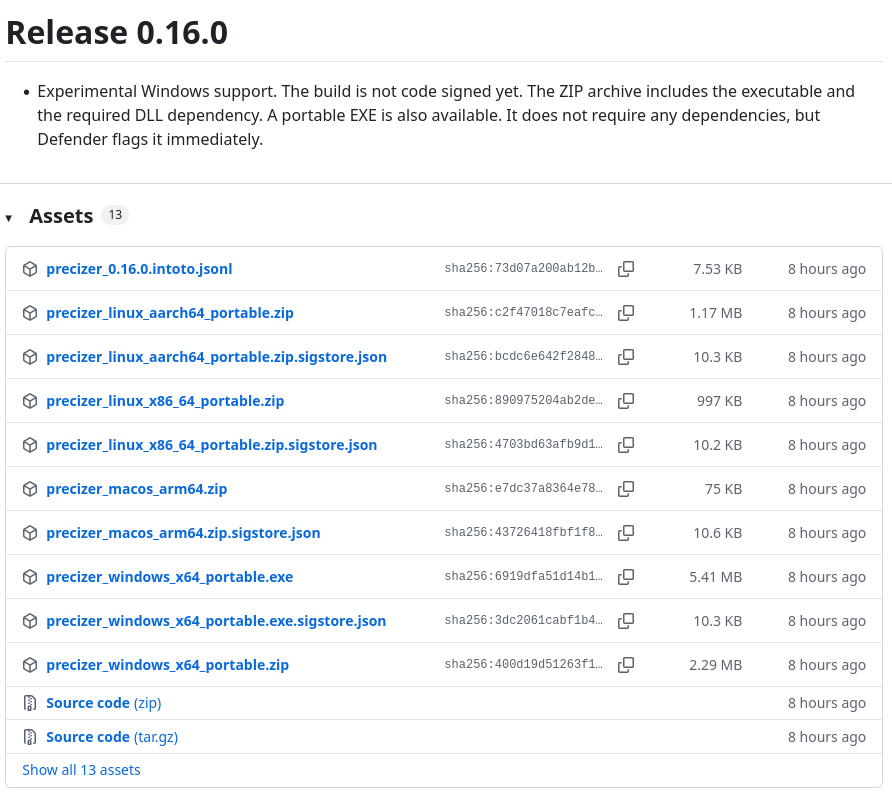
A milestone in version 0.16.0 was the introduction of experimental Windows support. Users have two deployment options: a classic ZIP archive containing the necessary dependencies (DLLs) and a fully standalone EXE file. It is worth noting that due to the absence of a publisher's digital signature, these binaries may trigger Microsoft Defender warnings. This is an expected outcome for independent open-source software built outside corporate supply chains; it does not affect the tool's functionality but requires conscious confirmation from the user to execute.
 The Price of Acceleration: CXMT’s Rapid Push into Memory