The mobile photography arms race has reached a critical juncture where simply increasing sensor counts is no longer the primary metric of progress. Samsung, long the vanguard of zoom technology, appears to be recalibrating its strategy in favor of efficiency and high-fidelity resolution. Recent leaks point toward an unexpected streamlining of the optical array in the upcoming Galaxy S27 Ultra—a move that likely signals a broader industry pivot: prioritizing the quality of individual modules over sheer quantity.
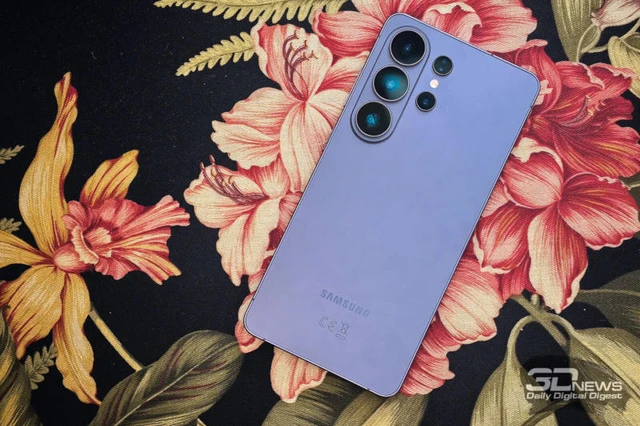
For several years, Samsung's Ultra series has served as a proving ground for the company's most ambitious optical innovations. The hallmark of these devices has been the dual-telephoto array, allowing users to switch seamlessly between different focal lengths. This evolved from an initial pairing of 3x and 10x zoom lenses into the current 3x and 5x configuration. However, according to recent data from ETNews, Samsung intends to radically pivot this approach in the next generation.
The Galaxy S27 Ultra may see the complete removal of the 3x telephoto module. This would mark a significant departure for the flagship line: for the first time, a top-tier smartphone will lose one of its primary zoom tools without replacing it with another physical lens. Instead, the strategy shifts toward a high-resolution 50MP 5x sensor, which is expected to handle the heavy lifting of capturing detail in distant objects.
Interestingly, Samsung appears to be pursuing more precise product segmentation. The S27 hierarchy may introduce a "Pro" model, positioned as a strategic middle ground between the base versions and the Ultra. Rumors suggest that the Galaxy S27 Pro will retain the 10MP 3x telephoto lens, creating a distinct functional divide between the "professional" and "ultimate" tiers.
Looking at the broader distribution of capabilities, a clear structure emerges: the base S27 and S27+ models will likely feature a standard kit consisting of a 50MP main sensor, a 12MP ultrawide, and a 10MP zoom lens. The Pro model will receive a substantial upgrade to a 200MP primary sensor and an improved 50MP ultrawide, while maintaining the classic 3x telephoto. At the summit of the lineup, the S27 Ultra will combine maximum resolution (200MP main and 50MP ultrawide) with a single, powerful 50MP 5x periscope lens.
This hardware optimization may be driven by more than just a desire for minimalism; it likely stems from harsh economic realities. The industry is currently grappling with a memory component crisis affecting nearly all major players. Streamlining camera configurations reduces the load on data processing systems and optimizes memory utilization—a critical factor amidst current supply shortages.
The Galaxy S27 series is expected to debut in early 2027. This transition could serve as a bellwether for the entire industry, signaling that the era of endlessly increasing camera counts is coming to an end, giving way to the intelligent application of high-resolution sensors and algorithmic image processing.
 Analog Aesthetics in Digital Execution