The line between software and hardware is blurring at an accelerating pace. OpenAI, which originated as a research lab for language models, is now aggressively pivoting toward the development of its own hardware ecosystem. The acquisition of Glass Imaging serves as a pivotal signal of the company's intent to transcend the limitations of cloud services. The objective has evolved: creating devices where artificial intelligence defines the very physics of image acquisition.
The $300 million acquisition of Glass Imaging marks a strategic pivot in OpenAI's expansion. While the Los Altos-based firm had previously attracted relatively modest investment, its technological potential has proven critical to the ambitions of the ChatGPT creators. At the heart of this acquisition is the drive to resolve a fundamental tension in modern mobile electronics: the conflict between the demand for professional-grade imagery and the physical impossibility of fitting bulky optics into a slim smartphone chassis.
Founders Ziv Attar and Tom Bishop are Apple alumni, where they spearheaded the development of the legendary portrait mode. This tenure provided them with a profound understanding of the limitations of traditional optics, prompting them to propose a radical reimagining of image creation.
While most contemporary smartphones rely on "computational photography"—essentially post-processing an image via algorithms—Glass Imaging takes a different path. Their technology embeds neural networks directly into the light-capture process. Artificial intelligence analyzes data from various camera modules the instant the shutter is pressed, effectively simulating a complex optical system that does not physically exist within the device. This achieves a level of depth-of-field and detail previously reserved for full-frame cameras equipped with massive lenses.
This move appears to be part of a broader strategic blueprint to build a proprietary hardware stack. Reports suggest OpenAI is developing an entire ecosystem of devices, ranging from smartphones and headphones to autonomous AI companions. Integrating cutting-edge optics into such gadgets would allow the company to create a seamless user experience, where the device's vision is as sophisticated as its cognitive capabilities.
This strategy is further validated by other high-profile investments. In 2025, OpenAI acquired io—a startup founded by the iconic Apple designer Jony Ive—for a staggering $6.5 billion. The fusion of Ive's aesthetic genius and Glass Imaging's technical breakthroughs suggests that OpenAI is not merely aiming to launch another gadget, but to establish a new paradigm for human-machine interaction, where hardware becomes a transparent and efficient extension of intelligence.
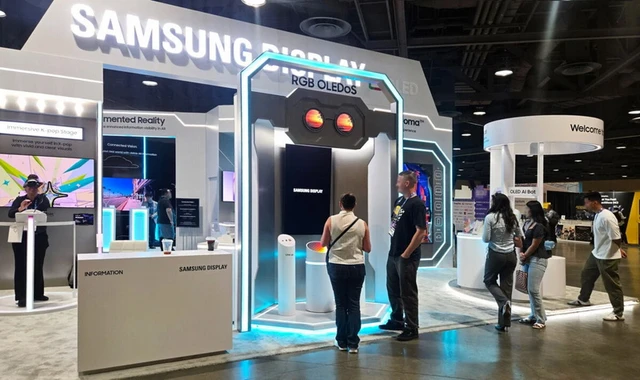 Samsung M16: A New Standard for OLED Panels