The global AI arms race is no longer just a battle of algorithms; it is increasingly defined by physical access to raw compute power. At the epicenter of this clash stands Nvidia, the dominant chip supplier, whose relationship with the Chinese market has evolved into a delicate dance between export licenses and geopolitical ambitions. The company's latest financial disclosures reveal a stark paradox: while the technical capacity to ship hardware is returning, the actual volume of these shipments remains negligible. This transforms high-tech exports into a diplomatic lever, where economic gain is increasingly subordinated to geopolitical expediency.
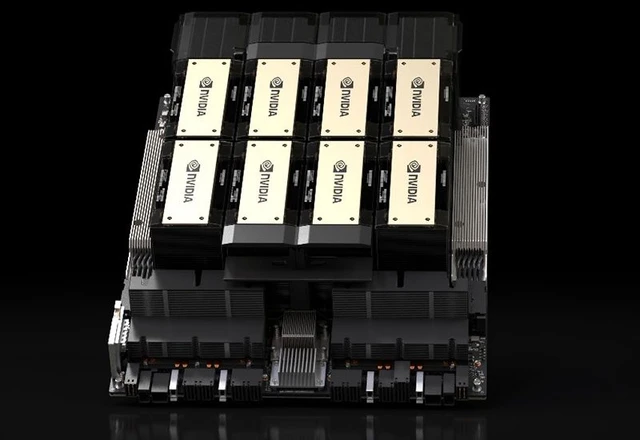
The resumption of H200 accelerator shipments to China, confirmed by Nvidia's quarterly earnings, may appear at first glance to be a victory. However, a granular analysis of the figures reveals that this success is largely symbolic. These shipments accounted for less than 1% of the company's total server revenue for the period, rendering them a statistical insignificance against the broader scale of the business. This cautious stance from Nvidia's leadership is driven by profound uncertainty; the company has omitted Chinese market forecasts entirely from its revenue expectations for the current quarter, which is projected to reach approximately $108 billion.
The core of the issue lies where technological progress collides with regulatory friction. Despite securing U.S. export licenses in January, Nvidia failed to realize the full planned volume of H200 deployments. The primary obstacle was not the American regulators, but rather the Chinese authorities themselves. In a drive toward technological sovereignty, Beijing is aggressively stimulating the development of domestic alternatives, creating internal headwinds for the import of even the most sophisticated solutions from the American giant.
This friction has translated into tangible financial losses. Over the past six months, Nvidia was forced to write down $400 million due to an accumulation of H200 inventory that simply failed to find buyers in the PRC. Consequently, geopolitical turbulence is being directly converted into losses, turning cutting-edge hardware into "dead stock" in warehouses.
Looking at the broader picture, Nvidia's revenue in China nearly doubled in the second quarter, reaching $7.88 billion. However, there is a critical caveat: this growth was driven by components that fall outside the scope of sanction restrictions. Within the server segment—which generated $89 billion for the company—actual earnings from H200 sales did not exceed $890 million. For comparison, the previous year was even more bleak: shipments of the lower-performance H20 chips generated less than $60 million before political decisions and internal Chinese restrictions effectively shuttered the pipeline.
The H200 saga demonstrates how inextricably linked business operations have become with state interests. Washington's agreement to allow the shipment of more powerful accelerators, granted late last year, required months of bureaucratic red tape. It was only in July that it became clear chips had begun entering China through official channels, albeit in extremely limited quantities.
Today, Nvidia accelerators have ceased to be mere commodities. They have become bargaining chips in the dialogue between two superpowers. Access to computational power is expected to be a central theme at the upcoming summit between the leaders of the U.S. and China, as every chip shipment represents not just a commercial contract, but a question of strategic dominance in the era of AI.
 iPhone 17: Dominating the Global Market