The generational shift in gaming consoles has always been a delicate balancing act between pushing the boundaries of technological innovation and maintaining market accessibility. Nintendo now finds itself in a position where regional regulatory mandates in Europe are accelerating the cycle of hardware turnover. Yet, the company has no intention of completely phasing out its most successful hit of recent years. Instead, the Kyoto-based giant is adopting a bifurcated strategy, repositioning the original Switch as a strategic tool for expansion into markets with differing electronic standards.
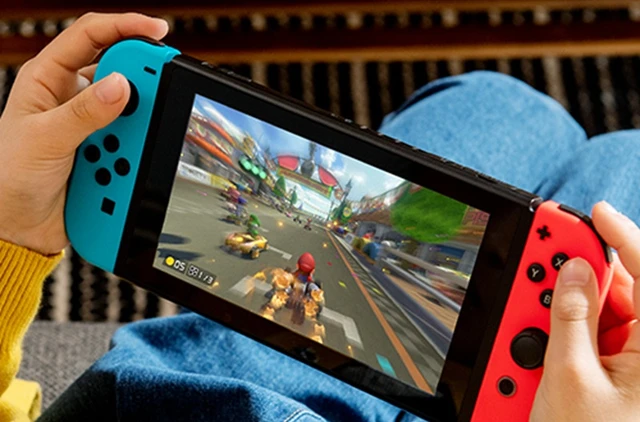
Nintendo's decision to wind down shipments of the Switch family in Europe by early 2027 appears less like a sudden abandonment of a successful product and more like a calculated tactical pivot. Starting in February 2027, retailers across the European region will cease receiving new batches of the standard console, as well as the Lite and OLED variants. However, the company has emphasized that device availability will remain stable through the end of 2026, providing consumers with a sufficient window to adapt to the upcoming transition.
The primary catalyst for this shift is the tightening of European Union regulatory frameworks. New environmental mandates and stringent electronics repairability requirements—specifically the obligation to implement replaceable batteries—render the production of legacy Switch revisions in Europe both economically and legally unfeasible. In response, Nintendo is preparing to launch updated versions of the Switch 2 this autumn, which will be fully compliant with European standards, featuring modified controllers and a redesigned power system.
However, the European scenario will not become a universal mandate. Nintendo has officially confirmed that outside the jurisdiction of Nintendo of Europe—most notably in the US and Japan—sales of the original console will continue. This strategy is driven by a desire to maintain a low barrier to entry for the company's ecosystem. While the Switch 2 is positioned for the technological premium segment, the first iteration of the console will continue to serve as a "budget gateway" into the world of gaming, attracting an audience for whom the cost of next-gen hardware may be prohibitive.
A critical component of this strategy is ongoing software support. Despite the looming generational shift, the Switch platform is far from obsolete; the release of titles such as Rhythm Heaven Groove demonstrates that the library continues to expand. This creates a unique state of coexistence between two hardware generations, where legacy hardware is sustained by current content, ensuring a seamless migration for users toward the new ecosystem.
Ultimately, Nintendo is transforming the Switch's lifecycle from a linear trajectory into a segmented one. While Europe transitions to new hardware standards, the rest of the world will continue to utilize the proven hybrid solution, allowing the company to maximize the monetization of its massive installed base until the very end of the product's commercial journey.
 iPhone 17: Dominating the Global Market