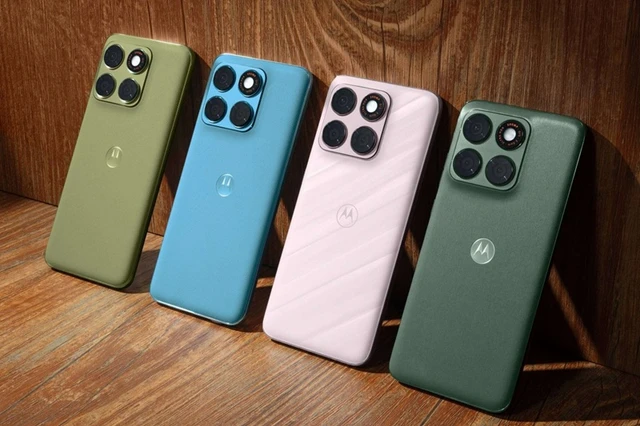
IFA 2026 served as the stage for Motorola to unveil a strategic pivot, shifting its focus from raw technical specifications toward a seamless synergy of aesthetics and utility. The company showcased a comprehensive ecosystem, integrating cutting-edge wearables, accessories, and flagship mobile solutions. Taking center stage was the Edge 70 Plus, a device engineered to redefine the benchmarks for battery longevity and color accuracy. This launch underscores the brand's commitment to crafting a premium user experience—one where technology operates as an invisible yet powerful catalyst.
The centerpiece of the presentation was the unveiling of the Motorola Edge 70 Plus—a device engineered to strike a precise balance between raw performance and visual comfort. The smartphone features a 6.78-inch AMOLED display with a 144Hz refresh rate, boasting rigorous Pantone certification. This ensures not only chromatic accuracy but also a natural rendering of skin tones, a critical requirement for contemporary mobile content.
Under the hood, the device is powered by a 4-nanometer Snapdragon 7s Gen 3 processor, paired with 8GB of LPDDR5X RAM. This synergy ensures high energy efficiency and a seamless interface experience, while the internal storage—available in 128GB or 256GB configurations—provides ample headroom for high-bitrate media files.
Particular emphasis has been placed on mobile photography. The 200-megapixel primary module, equipped with optical image stabilization (OIS), enables highly detailed captures even in challenging lighting conditions, supporting 10x digital zoom and 4K video recording. The system is rounded out by a dedicated macro camera and a 32-megapixel front-facing module. On the audio front, Hi-Res certified stereo speakers transform the smartphone into a comprehensive multimedia hub.
Yet, the true engineering triumph of the Edge 70 Plus lies in its endurance. The 6,500 mAh battery significantly outperforms market benchmarks, ensuring extended operation between charges. Support for 45W fast charging and reverse power delivery renders the device a versatile energy source for other peripherals.
Alongside the flagship smartphone, Motorola expanded its wearable portfolio with the introduction of the Watch Ultra. Housed in a 46mm chassis with IP68 and 5ATM ratings, these watches are tailored for active users and professional athletes. The OLED display reaches a peak brightness of 2,700 nits, ensuring legibility even under direct sunlight.
The computational heart of the timepiece is the Snapdragon W5+ Gen 1 chip running Wear OS. A pivotal innovation is the integration of LTE support, allowing Motorola watches to operate fully untethered from a smartphone for the first time. To provide deep health insights, the brand leveraged the expertise of Polar. Consequently, users gain access to advanced metrics: from sleep quality analysis (Nightly Recharge and Sleep Plus Stages) to the specialized Setene breathing exercise mode and a comprehensive "Running Coach." The Polar integration also introduces tools for activity intensity assessment, "smart calorie" calculation, and monitoring of the body's energy sources.
In the foldable segment, the company pivoted toward aesthetics and exclusivity. A limited edition of the Razr 70, created in collaboration with Swarovski, transforms the gadget into a piece of jewelry. The model, finished in PANTONE Meteorite, features a soft quilted chassis texture mimicking leather and is adorned with 35 Swarovski crystals. The focal point is a large 32-facet crystal integrated directly into the device's hinge mechanism.
Rounding out the ecosystem is the Snap—a magnetic wireless charger with 25W output, compatible with the Qi 2.2 standard. Thanks to precise magnetic alignment, the device minimizes energy loss and prevents overheating. When utilizing Motorola's proprietary protocol, charging power can scale up to 30W. From an engineering standpoint, the charger achieves zero power consumption in standby mode, aligning with modern ecological standards.
Ultimately, Motorola's strategy at IFA 2026 signals a shift from competing on isolated specifications toward the curation of a holistic ecosystem. The combination of exceptional autonomy, professional-grade health monitoring, and elements of high fashion allows the brand to carve out a unique niche in an oversaturated mobile technology market.
 The Evolution of Ultrabooks: Driven by Solid-State Cooling