Modern spaceflight is a relentless cycle of trial, error, and rapid adaptation. The disaster at Blue Origin’s Florida launch complex could have dealt a fatal blow to the company's launch manifest; instead, it has served as a catalyst for profound modernization. Rather than opting for a mere restoration of the destroyed facility, the company is pivoting toward the engineering of a more robust and versatile complex. This strategic maneuver will not only expedite the return of the New Glenn rocket to flight status but will also significantly augment its payload capacity.
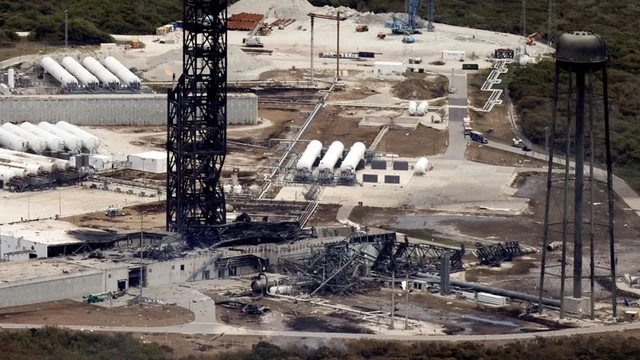
The catastrophic events of May 28, 2026, served as a severe trial for Blue Origin’s ambitions. During a static fire test of a fully assembled New Glenn launch vehicle on the pad, a massive explosion occurred, effectively leveling a significant portion of the LC-36 infrastructure. Despite the scale of the destruction, there were no casualties, and the high-value Amazon Leo satellites remained safe, as they had not yet been integrated into the rocket's payload section at the time of the accident.
Initial technical forensics, conducted under the leadership of CEO Dave Limp, indicate that the epicenter of the disaster was located in the aft section of the first stage. This is a critically complex node, housing the engines, propellant feed lines, hydraulic systems, and the avionics responsible for managing the reusable booster's return. Thanks to an extensive network of sensors and high-resolution cameras, engineers possess sufficient telemetry to precisely reconstruct the chain of events that led to the detonation.
Capital losses were substantial: the lightning tower, the transporter-erector, and the hydraulic cylinder system were completely destroyed. However, strategically vital assets—including the propellant farm, the integration hangar, the access tower, and the water deluge system—survived and remain operational. This critical detail allowed Blue Origin leadership to make a bold strategic pivot: rather than simply restoring the complex to its previous state, they are using the crisis as a catalyst for a systemic evolution of their launch architecture.
Instead of reverting to old blueprints, the company is transitioning to an "enhanced" configuration of the New Glenn. While the previous design utilized seven engines on the first stage and two on the second (7 × 2), the new iteration will adopt a 9 × 4 formula. This increase in propulsion units significantly boosts both thrust and total payload capacity, rendering the vehicle far more competitive in the heavy-lift market.
However, the shift to a more powerful rocket necessitated a complete overhaul of launch processing logistics. The previous transporter-erector, beyond being destroyed, likely lacked the structural margins required to handle the massive 9 × 4 configuration. As a solution, Blue Origin is implementing a hybrid preparation scheme: stages will now be mated horizontally within the assembly hangar before being transported to the pad, where a specialized crane will hoist the rocket into a vertical position.
This strategic engineering pivot bypasses the need to develop a new, complex transporter—a process that would have taken years. By shifting to crane-assisted verticalization and horizontal assembly, the company is minimizing recovery timelines, providing a window to resume launches by the end of the current year—just six months after the accident.
Industry observers, including NASA, view this optimistic schedule with cautious confidence. NASA Administrator Jared Isaacman noted that within the context of global plans for a lunar base, the agency has a temporal buffer extending to 2027. This implies that even if new technical hurdles emerge, Blue Origin remains within an acceptable window to fulfill its commitments to joint deep-space exploration programs.
 Taiwan's Space Program: The First Major Milestone