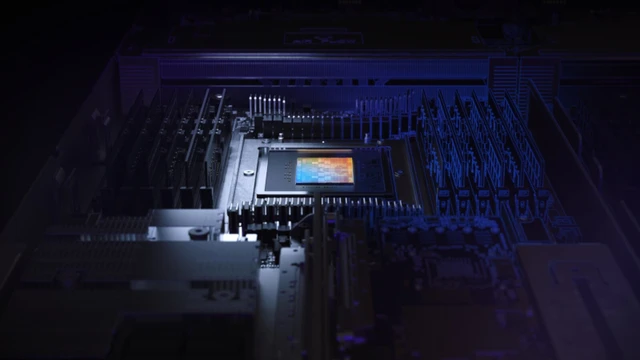
Deep space exploration is evolving from a phase of mere presence into an era of autonomous intelligence. The primary bottleneck for lunar missions remains critical signal latency and the constrained bandwidth of communication links with Earth. The solution lies in deploying high-performance computing resources directly onto the lunar surface. The integration of Nvidia Jetson modules into upcoming expeditions marks the dawn of true edge AI beyond Earth's atmosphere.
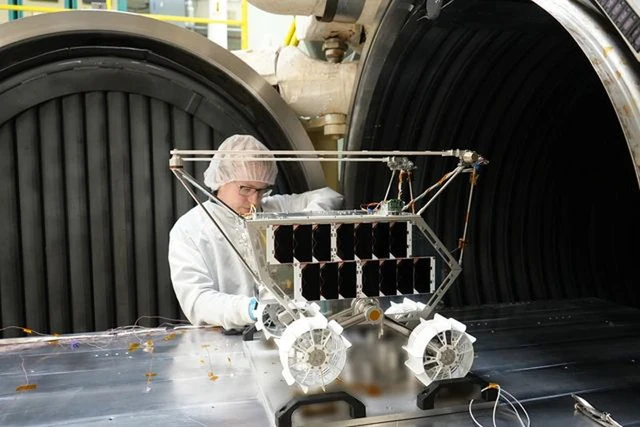
Modern space exploration is grappling with a fundamental constraint: the vast distances involved render traditional real-time remote control virtually impossible. In this context, the ambitions of startup Lunar Outpost take on critical importance. The company intends to achieve a historic first by deploying an Nvidia GPU on the lunar surface, integrating a Jetson family module into its compact MAPP rover. This vehicle is set to become a cornerstone of the Lunar Voyage 2 mission, scheduled for launch by the end of 2026.
The role of the GPU in this architecture extends far beyond simple graphics acceleration. The processor will serve as the machine's "cerebellum," overseeing navigation and primary terrain analysis. Specifically, the module will manage LiDAR operations, process massive 3D point clouds, and generate real-time topographic maps. To optimize these workflows, the system leverages specialized CUDA-X libraries, maximizing the efficiency of parallel computing for computer vision tasks.
The intended landing site—the Reiner Gamma region—is particularly intriguing. Known for its magnetic anomalies and enigmatic luminous "swirls" on the surface, it serves as an ideal proving ground for autonomous systems. However, the path to this objective is fraught with risk. Transport will be handled by a Falcon 9 rocket through a partnership with Intuitive Machines—a company whose previous soft-landing attempts were marred by technical complications and vehicle tip-overs.
The rover's control stack utilizes a hybrid architecture. Traditional deterministic algorithms, hardcoded by engineers, are augmented by "physical AI" that analyzes data from cameras and sensors in real-time during locomotion. This approach enables the craft to autonomously identify safe routes and navigate around craters and boulders without awaiting instructions from Earth. Such autonomy is critical, as transmitting raw data back to the planet and waiting for an operator's response would introduce unacceptable control latency.
Nevertheless, deploying commercial Jetson chips in deep space is a bold experiment. Unlike specialized space-grade processors, these modules lack native radiation hardening. Furthermore, the electronics must endure the extreme temperature swings of the two-week lunar night. The mission's success hinges on the efficacy of the thermal management and ionizing radiation shielding that developers are integrating into the rover's chassis.
Parallel to surface operations, an orbital vector is also unfolding. Nvidia has already reached agreements to place a Jetson module aboard Firefly Aerospace’s Elytra orbiter. The Ocula system will process lunar imagery in both ultraviolet and visible spectra directly in orbit, filtering massive datasets before transmitting them to Earth.
Ultimately, we are witnessing the strategic expansion of Edge Computing into interplanetary space. Shifting intelligent data processing from centralized servers to end-devices in deep space paves the way for truly autonomous exploration systems—machines capable of making critical decisions amidst uncertainty and within hostile environments.
 The Expansion of the 1c Process Node in DRAM