The global surge in artificial intelligence is fundamentally rewriting the playbook for the semiconductor industry, transforming high-speed memory into one of the most critical bottlenecks. Amidst this relentless pursuit of performance, Taiwan-based Nanya is wagering on a radical overhaul of its manufacturing capabilities. By investing heavily in EUV lithography, the company aims to emerge from the shadow of industry titans and secure access to next-generation process nodes. This represents far more than a mere facility expansion; it is a strategic pivot designed to redefine Nanya's market standing in the age of generative AI.
Central to Nanya’s strategic pivot is the ambitious completion of its Fab 5A facility. The company has committed investments totaling 346.6 billion TWD (approximately $10.7 billion) to facilitate a transition toward advanced process nodes. The primary technological catalyst here is Extreme Ultraviolet (EUV) lithography—an exposure method that enables significantly denser and more power-efficient transistor structures than traditional Deep Ultraviolet (DUV) methods. Full-scale production of EUV-based DRAM is expected to commence in the second half of 2027.
The company's technological roadmap is centered on the development of 10nm-class memory, specifically targeting the 1C, 1D, and 1E generations—the industry standards for cell packing density. Currently, Nanya has already launched pilot production for 1C chips, while the more advanced 1D and 1E nodes remain in the development phase. This phased approach is designed to mitigate the risks associated with implementing highly complex EUV equipment, which is notorious for its volatility and steep maintenance costs.
The scaling of Fab 5A's capacity will be an iterative process. The company aims to reach a throughput of 30,000 wafers per month by 2028, increasing to 35,900 by 2029. Ultimately, the facility's design capacity is targeted at 45,000 wafers monthly. Total capital expenditures for the development of Fab 5A are estimated at approximately $16 billion, underscoring Nanya's determination to compete among the top tier of global memory manufacturers.
It is critical to recognize that the adoption of EUV lithography represents more than mere capacity expansion; it is a fundamental qualitative shift. Nanya aims to bypass the redundancy of legacy process nodes and focus exclusively on modern memory architectures. Parallel to this, the company is finalizing the qualification process for LPDDR5 chips—components that are vital for mobile devices and Edge AI systems, where power efficiency is as paramount as data throughput.
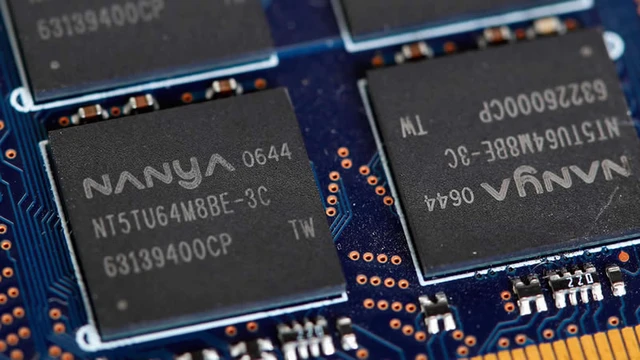
Historically, Nanya has occupied a modest niche in the global DRAM market, holding roughly a 1.6% share. However, recent quarters have seen an unexpected surge in financial growth, driven by a spike in demand for legacy DDR3 and DDR4 standards. Despite the temporary success of these older products, the company is wary of the "legacy trap": currently, modern DDR5 memory accounts for only about 10% of total revenue. The launch of Fab 5A is intended to radically pivot this ratio, shifting the primary revenue stream toward high-performance solutions.
This drive toward modernization is mirrored across the region; Winbond, for instance, has also announced plans to double its DRAM output. Consequently, the Taiwanese semiconductor cluster is positioning itself as a formidable counterweight to global incumbents, leveraging the strategic window of opportunity created by the artificial intelligence boom.
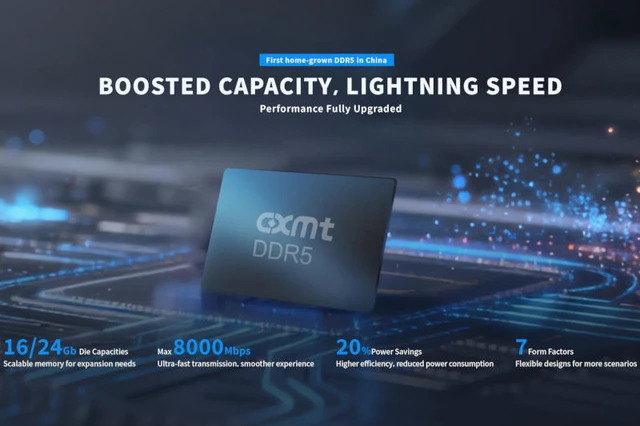 The Price of Acceleration: CXMT’s Rapid Push into Memory