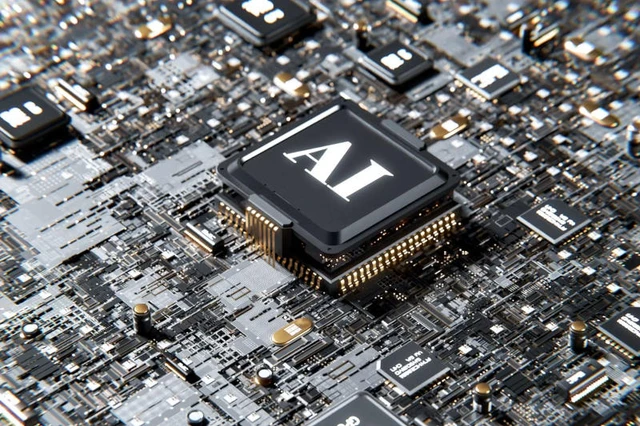
The global AI arms race is rapidly shifting its center of gravity from algorithmic refinement to hardware infrastructure. For the world's tech titans, an over-reliance on a narrow consortium of compute providers has introduced critical strategic vulnerabilities and mounting financial strain. Meta intends to break this cycle by pivoting toward the large-scale production of its own proprietary, specialized silicon. The unveiling of the Iris chip signals the company's definitive move toward total infrastructural autonomy.
In the era of generative AI, the pursuit of technological sovereignty has become an existential imperative for Meta, critical to both its survival and operational efficiency. The company is officially pivoting toward an ambitious roadmap of proprietary semiconductor solutions to mitigate its reliance on the dominance of Nvidia and AMD. At the heart of this strategy lies the Meta Training and Inference Accelerator (MTIA) project, which has culminated in a chip codenamed Iris.
Iris is far from a mere attempt to replicate existing GPUs; it is a specialized instrument optimized for the specific workloads of Facebook and Instagram. Unlike general-purpose accelerators, custom silicon allows Meta to fine-tune the training and inference processes of its models, significantly slashing power consumption while accelerating data throughput. Notably, the testing phase for the new processor lasted only six weeks and revealed no critical flaws—a pivotal breakthrough following five years of internal development inertia.
To realize such a complex engineering vision, Meta has cultivated an extensive ecosystem of strategic partnerships. Broadcom handles the design, while fabrication is entrusted to TSMC—the only player in the industry capable of delivering the requisite transistor density and process precision. However, the chip itself is only one piece of the puzzle. To ensure full-scale data center functionality, Meta has engaged Samsung for memory supplies, Sandisk for persistent storage systems, and Sumitomo Electric for the deployment of high-speed fiber-optic infrastructure.
Meta’s strategic calculus is built upon an unprecedented hardware refresh rate. While the industry benchmark for chip generation updates is typically a year or more, Meta plans to release updated iterations of its processors every six months. This aggressive cadence will enable the company to adapt more rapidly to the volatile requirements of Large Language Models (LLMs).
The scale of investment underscores the gravity of these intentions: by the end of the year, the company may allocate up to $145 billion toward AI infrastructure. The system's power requirements are also growing exponentially. While Meta is deploying 7 GW of capacity this year, that figure is projected to double to 14 GW by 2027.
The transition to in-house silicon addresses the primary challenge of recent years: the logistical and fiscal friction of scaling third-party solutions. The experience of deploying Nvidia hardware demonstrated that even with massive budgets, dependence on an external vendor creates a bottleneck for the entire ecosystem's growth. By creating Iris, Meta is effectively rewriting the playbook, evolving from a hardware consumer into a true architect of the computational future.
 iPhone 17: Dominating the Global Market