The global semiconductor market is once again grappling with volatility that threatens even the industry's most resilient titans. For years, Apple has been regarded as the gold standard of supply chain orchestration, leveraging long-term agreements to insulate itself from market fluctuations. Yet, the current component shortage has reached a tipping point, where the company's internal buffers can no longer absorb the escalating costs. Management's admission that price hikes are inevitable signals a pivotal shift in the tech giant's pricing strategy.
Apple's prowess in securing exclusive supplier terms has long been one of the company's primary strategic advantages. Its sheer procurement scale and financial clout allowed Cupertino to maintain a strategic hedge, effectively shielding the end consumer from volatile fluctuations in component costs. However, as revealed in an interview with The Wall Street Journal, this mechanism is no longer functioning effectively.
The situation within the memory market has reached a breaking point. The core of the issue lies in a fundamental structural pivot in production: suppliers are scaling back the output of chips destined for consumer electronics, redirecting their capacity toward higher-margin or higher-demand segments—specifically, server solutions for Artificial Intelligence. This shift is creating an artificial scarcity that inevitably drives prices upward. Despite Apple's efforts to mitigate this trend, company leadership has openly admitted that continuing to suppress product costs is becoming untenable.
Interestingly, the strategy of price escalation has already begun, albeit in a stealth capacity. The recent Mac mini rollout serves as a prime example: while the official starting price remained unchanged, the most affordable entry-level configuration with minimal memory was quietly phased out. Consequently, the barrier to entry for the consumer has effectively risen, allowing the company to increase its Average Selling Price (ASP) without altering the official price list.
The market is now bracing for a comprehensive hardware refresh. The September debut of the iPhone 18 and the long-awaited arrival of the first-ever foldable iPhone are expected to be the primary catalysts for price pressure. It is highly probable that these new models will be positioned in even more premium price brackets to offset the surging costs of hardware components.
This fiscal volatility coincides with a seismic shift in the company's upper echelon. Effective September 1, Tim Cook will transition to the role of Chairman of the Board, passing the torch to John Ternus. As a result, the new CEO will begin his tenure amidst acute resource scarcity and the necessity of revising product pricing—a formidable litmus test for his leadership style and his ability to maintain brand loyalty in an era of increasingly expensive hardware.
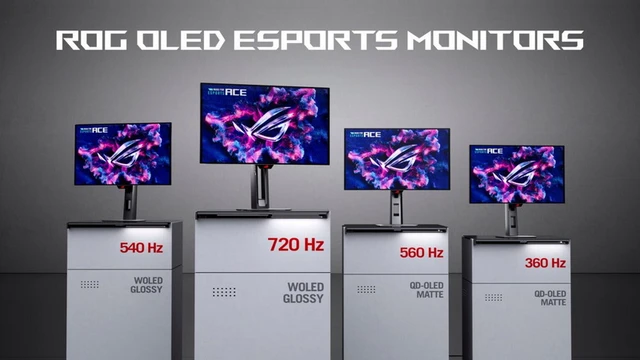 The Speed Limits of Modern Gaming Displays