The global AI surge has shifted the critical infrastructure bottleneck from raw compute power to the availability and cost of memory. Skyrocketing DRAM prices are forcing tech giants to rethink hardware lifecycles and explore unconventional scaling strategies. Google has pivoted to a radical recycling approach, harvesting components from decommissioned servers to sustain new deployments. This precedent exposes the profound fragility of global supply chains amidst the relentless AI arms race.
The contemporary high-performance computing (HPC) landscape is grappling with a paradoxical dilemma: while the industry focuses on GPU throughput and tensor core performance, the actual critical bottleneck has shifted to system memory. In a typical modern AI server, memory components now account for over 75% of the total hardware expenditure. This economic imbalance has transformed DRAM from a mere commodity into a strategic asset, the scarcity of which is redefining the operational rules of the modern data center.
In response to this crisis, Google has adopted a strategy that, in any other industry, would be termed "hardware cannibalization." The company has begun harvesting DDR4 modules from decommissioned servers on a massive scale. To integrate these legacy memory standards into cutting-edge systems, specialized hardware adapters were developed. This approach allows legacy modules to function within modern AI clusters, effectively extending the lifecycle of hardware that would otherwise have been slated for recycling.
Market dynamics only underscore the desperation of the situation. Data from TrendForce and Goldman Sachs indicate a steady climb in pricing: server DRAM costs are projected to rise by 13–18% in the third quarter, while PC memory could see increases of up to 23%. High volatility in spot pricing for DDR4 and DDR5 modules has rendered enterprise-scale procurement both prohibitively expensive and strategically risky.
However, hardware reclamation is only one facet of a broader, integrated strategy. To mitigate reliance on raw physical capacity, Google is pursuing aggressive software-level optimization. The primary focus is on libraries and algorithms for KV-cache (Key-Value cache) compression—a critical mechanism that determines the amount of context a model can maintain during token generation. Optimizing this layer reduces the resource overhead per unit of compute, effectively increasing overall "computational density."
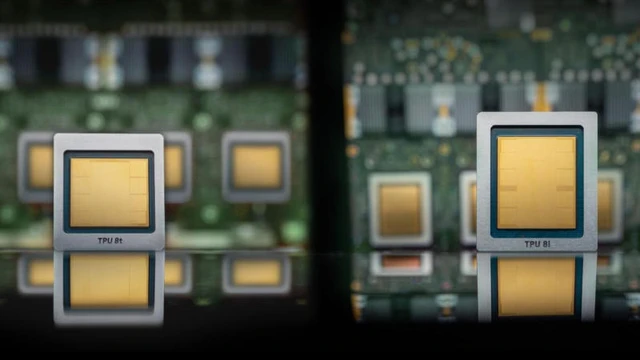
Particular attention is being paid to the memory hierarchy within new accelerators. For instance, the TPU8i, designed for inference, employs a tiered approach: the primary data array is handled by 288 GB of ultra-fast HBM3E memory integrated directly into the accelerator. Meanwhile, host-side operations traditionally rely on DDR5. Yet, it is precisely here that the DRAM shortage has hit hardest; in several scenarios, Google has been forced to swap modern DDR5 for those same refurbished DDR4 modules.
Consequently, the struggle against resource scarcity has birthed a closed-loop ecosystem within the infrastructure of one of the world's largest AI operators. The fact that cutting-edge machine learning systems are now relying on decade-old components highlights the critical dependency of digital progress on the physical constraints of the semiconductor market.
 Nvidia N1X and the New Era of Arm PCs