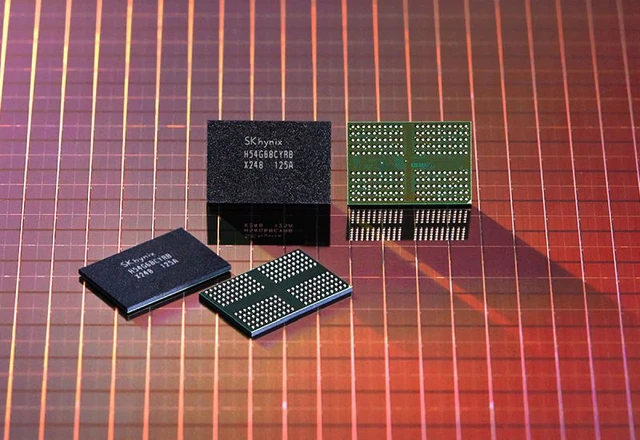
The contemporary semiconductor market is undergoing a period of unprecedented transformation, where component pricing is increasingly dictated not merely by manufacturing overheads, but by strategic scarcity. DRAM has evolved from a mere commodity into a strategic asset, comparable in value to precious metals. This phenomenon underscores a global pivot toward an era of compute-intensive processing and the explosive growth of artificial intelligence infrastructure. Current market dynamics are forcing the industry to confront a fundamental question: what is the ultimate ceiling for the valuation of digital resources?
In today's technological economy, the metaphor of "memory worth its weight in gold" has taken on a startling literalness. According to data from Chosun Biz, the export value of South Korean-manufactured DRAM chips has surged 12.5-fold over the last three years and seven months. To put this into perspective: one kilogram of such memory is currently equivalent in value to 620 grams of gold and nearly 42 times the cost of a kilogram of silver.
The growth trajectory of DRAM values during this period has been significantly more aggressive than that of precious metals. While gold prices rose 2.4-fold, South Korean semiconductors experienced an exponential leap. Currently, the average export price for a kilogram of chips from South Korea has reached $92,183. The statistics for August are particularly striking: during the first three weeks of the month, growth hit 401% year-on-year, while total regional export revenue from DRAM shipments skyrocketed by 504.8%, reaching the $9.8 billion mark.
The technical side of the equation partially explains this spike. There is a steady trend toward increased data density: the average capacity of exported DRAM chips has doubled over the year, increasing from 1 GB to 2 GB per chip. Naturally, higher memory density per die translates to higher market value. However, this factor is merely foundational and cannot serve as the sole justification for such a rapid price rally.
The primary driver lies within the server solutions segment. According to TrendForce, contract prices for server DRAM rose by 64% in the second half of last year, with a staggering 270% increase projected for the current year. Activity peaked in the second quarter, with prices climbing consistently by 53–58%. Growth is expected to continue within the 13–18% range in the third quarter, stabilizing at 3–8% by year-end.
This trend inevitably cascades down to the consumer market. In Germany, the average cost of DDR5 modules has increased nearly five-fold (4.86x) since July of last year. Similar trends are evident in the US and Japan. The situation is further complicated by the fact that, even at exorbitant prices, physical access to hardware is limited. The market has been overtaken by specialized bots that snap up high-demand memory modules seconds after they hit the shelves, effectively stripping average users of the opportunity to purchase equipment at a reasonable price.
This market state signals a profound structural shift. DRAM has ceased to be a mere PC component; it has become a critical resource for training Large Language Models (LLMs) and powering cloud computing, transforming semiconductors into the new strategic asset of the digital era.
 The Speed Limits of Modern Gaming Displays